Category: Selling a Mobile Home

  • How to Sell a Mobile Home by Owner in San Diego

    How to Sell a Mobile Home by Owner in San Diego

    How to Sell a Mobile Home by Owner in San Diego

    To sell your mobile or manufactured home by owner in San Diego, first confirm whether you are selling a home in a mobile-home park on a rented space or a home with land. Review the home’s current title and registration, any outstanding loan or lien, and the park’s rental agreement and rules when applicable. Use recent sales of similar homes in the same park whenever possible to set an asking price, then prepare the home and organize the transaction documents.

    A homeowner can sell a used mobile home in a park without hiring the park manager as the sales agent. For a home that will remain in the park, park management may review the prospective buyer’s residency application, but that is separate from your right to sell the home. You must notify management of the sale before closing. For assistance with selling, visit SD Mobile Home Guide.

    Check San Diego Park Rules and Land Ownership

    Before setting a price or scheduling showings, confirm whether the sale includes the home only or both the home and the land.

    If the home is in a San Diego mobile-home park, review the rental agreement and written park rules. Ask management how it handles prospective residents, occupancy requirements, and any applicable sale-related paperwork. A park may screen the purchaser for residency, but it cannot require you to use park management as your sales agent.

    For a home that will remain in the park, the seller or seller’s agent must notify park management of the sale before closing. If management identifies any work it says is required as a condition of the sale, ask for the written explanation and its basis; California law limits park-required repairs and improvements.

    If the sale includes land, review the deed and relevant property records, and confirm whether the home is classified and recorded as real property rather than assuming it is.

    Price Your Mobile Home for the San Diego Market

    Start with recent sales of comparable homes in the same park, when available. Compare home age, size, layout, condition, repairs, upgrades, and included features.

    Do not assume a nearby park automatically provides comparable prices. A park’s location, upkeep, quality, amenities, buyer demand, and space rent can materially affect what buyers will pay, even when two parks are close together.

    For a home sold with land, use sales with a similar land-ownership arrangement rather than comparing it directly with a home on leased park space. If relevant sales are limited, a local mobile-home agent or qualified appraiser may help evaluate the differences.

    Prepare Your Home and Sale Documents
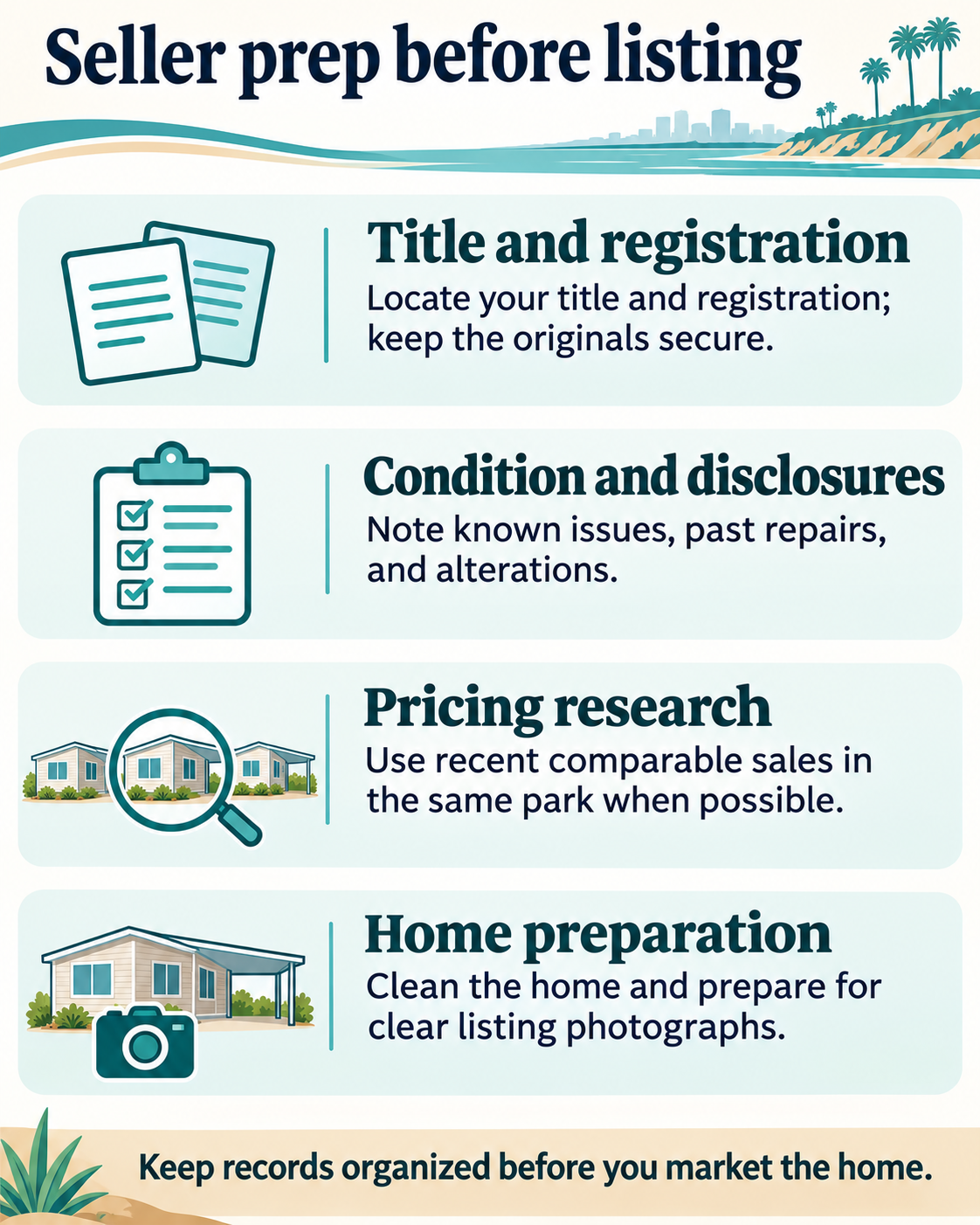
    Four unnumbered seller-preparation groups covering title and registration, condition and disclosures, pricing research, and home preparation.
    Organize records and condition notes, research pricing, and prepare the home for listing photographs.

    Clean the home, remove clutter, and address small repairs you decide to make before showings. Photograph the exterior, living areas, kitchen, bathrooms, bedrooms, and carport or patio if present.

    Locate the current Certificate of Title and registration card, verify the owner information, and check for a recorded legal owner or lienholder. If the title or registration is missing, or ownership information is inconsistent, contact the California Department of Housing and Community Development (HCD) for the appropriate replacement or transfer process.

    Keep original ownership documents secure while the transaction is being arranged. Make available information about known repairs, upgrades, and included appliances. For a park home, park-specific rent, rules, and residency details should be confirmed with management for the particular home and space when the transaction reaches that stage.

    Complete California Mobile Home Disclosures

    For a manufactured home or mobilehome sold in a mobilehome park, California’s resale disclosure requirements include the Manufactured Home and Mobilehome Transfer Disclosure Statement. Accurately disclose known defects, past damage, repairs, alterations, and other matters covered by the applicable form; selling as-is does not remove applicable disclosure duties.

    When a home will remain in the park, park management may request a copy of that disclosure statement in writing. If the sale includes land or involves a different legal ownership arrangement, confirm which additional or different disclosure requirements apply rather than assuming every property uses the same paperwork.

    Keep copies of completed disclosure documents and consult the current California forms or a qualified professional when a special circumstance is involved.

    Advertise the mobile home using clear photographs and an accurate description of its location, size, layout, condition, and included features. For a park home, identify the space-rent information you currently have, while making clear that the buyer should confirm the current, space-specific terms with park management.

    You may advertise a home that will remain in a park without appointing management to sell it. Follow reasonable rules for arranging access and showings, and do not promise that a prospective buyer has been accepted for residency.

    Ask prospective buyers about their purchase timeline and whether they understand that financing and park residency are separate processes. Protect personal information and arrange safe showings.

    Compare Offers and Set Sale Terms

    Evaluate offers for price, proposed financing, contingencies, closing timeline, and the buyer’s understanding of the park residency process if the home is in a park.

    Put the accepted terms in a written purchase agreement, including the price, deposit, included appliances or other items, contingencies, expected closing date, and how closing costs will be handled. An offer does not itself mean that park residency screening or lender review is complete.

    Keep copies of all signed agreements and coordinate any lien payoff or release as part of the transaction.

    Coordinate Park Residency and Transfer Ownership

    For an existing park home that will stay in the community, the prospective buyer completes any personal residency application and screening required by park management. Management’s review concerns whether the buyer may reside in the park; it is not the same as a separate approval of your right to sell the home.

    In the usual accepted-offer workflow, arrange for current space rent, written rules, and residency information for that specific home and space to come from park management. The law also provides ways for a prospective resident to request specified park information before an offer is accepted, so the accepted-offer timing is a transaction practice rather than a universal legal prerequisite.

    For an HCD title-and-registration transfer, use HCD’s private-sale instructions for the home’s existing ownership certificate and tax or registration category. The original title, most recent registration card, transfer forms, any lien release, and applicable tax documents are coordinated through the sale. A county tax-clearance certificate is required for certain locally taxed homes, not every mobile-home sale.

    Close the Sale and Hand Over the Home

    Before closing, confirm that required park notice has been given and that the residency and transaction conditions in the agreement have been addressed. Use the agreed escrow or other documented payment and closing arrangements, and follow the applicable HCD transfer instructions.

    Do not assume that every sale requires an identical notarization, payment method, or title-delivery process. Keep the original title and registration secure until the parties handling the closing are ready to complete the transfer. Hand over keys and possession according to the completed transaction and purchase agreement.

    Remove your belongings, document the final condition if appropriate, provide agreed keys and appliance information, and coordinate utility changes and any final park notifications.

    Conclusion

    Selling a mobile home by owner in San Diego involves more than advertising and accepting an offer. Start with accurate title and registration information, use the most relevant same-park comparables, provide applicable disclosures, and distinguish park residency screening from your right to sell.

    For a home staying in a park, notify management before closing, coordinate the required ownership transfer, and use the agreed closing process for payment and possession. For help selling a mobile or manufactured home in San Diego, visit SD Mobile Home Guide.
  • How to Sell a Mobile Home Without Owning the Land in San Diego

    How to Sell a Mobile Home Without Owning the Land in San Diego

    How to Sell a Mobile Home Without Owning the Land in San Diego

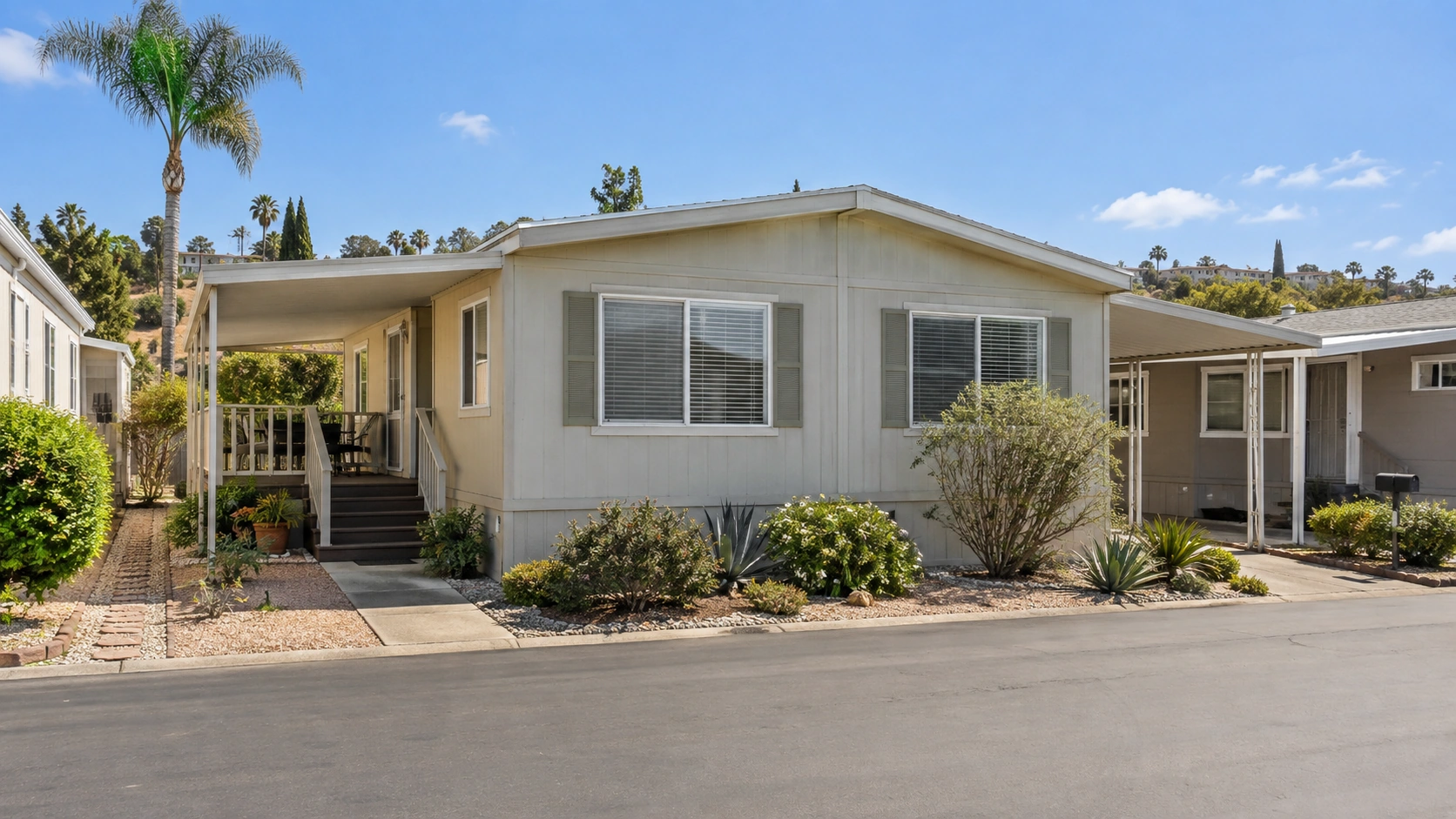
    You can sell an existing mobile or manufactured home in a San Diego mobile-home park even when you rent the space beneath it. You are selling your ownership interest in the home, not the park’s land. Start with the home’s current title and registration, check for outstanding liens, and review the park’s rules and prospective-resident application process. A sale of a home that remains in the park requires notice to management before closing, while the buyer’s residency review is separate from the seller’s right to sell. For help selling, visit SD Mobile Home Guide.
    Confirm You Own the Mobile Home

    Have the current Certificate of Title and registration card ready for review. If another owner or a lender is listed, work with your sales agent or the person handling the transfer to arrange any required signatures or lien release.

    If you cannot locate the title or registration card, contact the California Department of Housing and Community Development (HCD) for the applicable replacement instructions. Keep original ownership documents secure while arranging the sale; do not hand them to a prospective buyer simply to show that you own the home.

    Check San Diego Park and Lease Rules

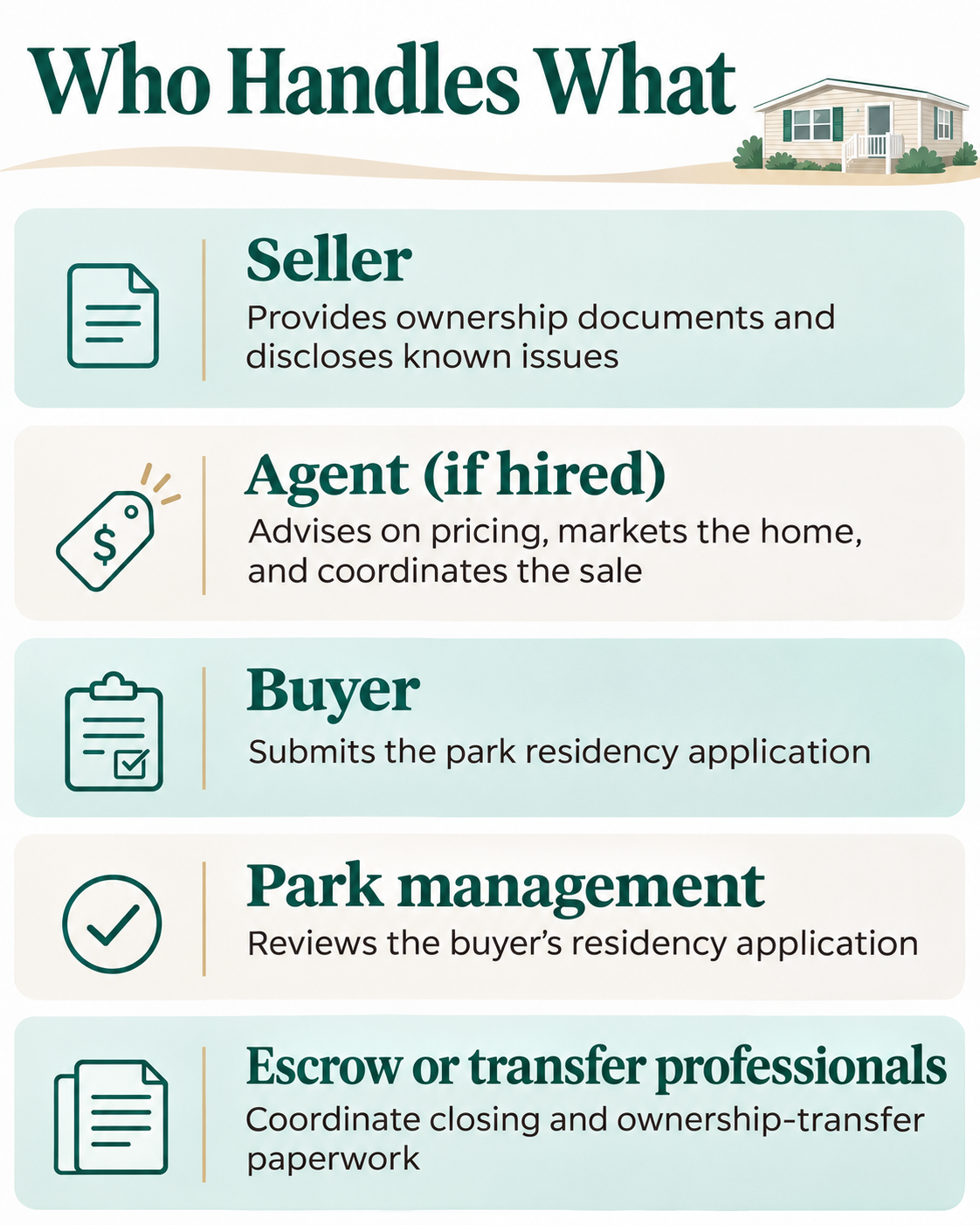
    Five unnumbered cards explaining seller, hired agent, buyer, park management, and escrow or transfer responsibilities.
    Different parties handle different responsibilities; agent services apply when an agent is hired.

    Read your park rental agreement and current written rules. Ask how management handles residency applications, occupancy requirements, and any sale-related information for a home that will remain on its space.

    California law allows management to review a prospective buyer for residency, but park management generally cannot prevent the homeowner from listing or selling the home or require the homeowner to use management as the selling agent. The seller or the seller’s agent must notify park management of a sale of a home that will remain in the park before closing.

    If you work with a sales agent, the agent can help confirm the current space rent, rental terms, rules, and residency requirements after you accept an offer. Buyers may have a legal right to request certain park information earlier; an accepted offer is not always required.

    Gather California Sale and Transfer Documents

    Start with the current title and registration card. The other transfer paperwork depends on the home’s ownership, liens, and tax or registration status. Follow HCD’s private-party sale instructions for the type of ownership certificate you have.

    Some homes still have a DMV-issued ownership certificate, often called a pink slip. Follow HCD’s instructions for that certificate; don’t assume the transfer should be handled at a DMV office.

    Depending on the home, the HCD transfer may also need a transfer form, lienholder release, or tax-related documents. A separate bill of sale is not required for every transaction. County tax clearance applies to certain locally taxed homes, not every park home.

    Complete the applicable Manufactured Home and Mobilehome Transfer Disclosure Statement and disclose known issues accurately. If the home stays in the park, management may request a copy of the statement in writing.

    Price and Prepare Your Mobile Home

    Start with recent sales of similar homes in the same park whenever possible. Compare home age, size, layout, condition, upgrades, needed repairs, and included features. The park’s location, condition, desirability, amenities, and space rent can affect the home’s value.

    Do not assume a sale from the closest park is necessarily a good comparable. Two parks near each other may have substantially different home values because of differences between the communities themselves.

    Clean the home, remove clutter, and discuss any repairs or an as-is sale with your sales agent if you have one. Make the home available for photographs and showings, and share accurate information about known issues, past repairs, and improvements.

    Find a Buyer and Coordinate Park Residency Review

    A sales agent can market your home with accurate details and a reasonable asking price, or you can handle the listing yourself if you’re selling without an agent. Park management cannot generally require you to use its listing service or selling agent. Confirm the practical arrangements for showings and inform serious buyers that buying the home and being accepted to reside in the park are different matters.

    The buyer, with help from the buyer’s agent if involved, submits the personal residency application and required signatures to management. Park management handles that screening process.

    Park management must follow California’s requirements when reviewing the buyer’s residency application. Do not promise a buyer guaranteed approval. This review determines whether the buyer can live in the park; it is separate from your right to sell the home.

    Transfer Title and Registration and Close the Sale

    Coordinate the title and registration transfer through the applicable HCD process and the parties handling closing. Resolve any recorded lien or legal-owner interest and follow the purchase agreement for funds, signatures, possession, and key delivery. The seller retains originals securely until the transfer is ready to be completed.

    A typical sale leaves the home on its current space. California limits when park management can require removal because a home is sold. A planned move calls for separate, transaction-specific advice.

    Keep copies of the completed agreement, disclosure paperwork, payment records, and transfer submissions. Coordinate utility account changes and the key handoff according to the agreed closing terms.

    Conclusion

    Before closing, review the remaining paperwork and deadlines with the person coordinating your sale. Know who is handling the title transfer, when payment and possession will change hands, and whether the buyer’s park application still needs attention.

    For help planning your sale, visit SD Mobile Home Guide.
  • How to Sell a Mobile Home in San Diego: A Step-by-Step Guide

    How to Sell a Mobile Home in San Diego: A Step-by-Step Guide

    How to Sell a Mobile Home in San Diego: A Step-by-Step Guide

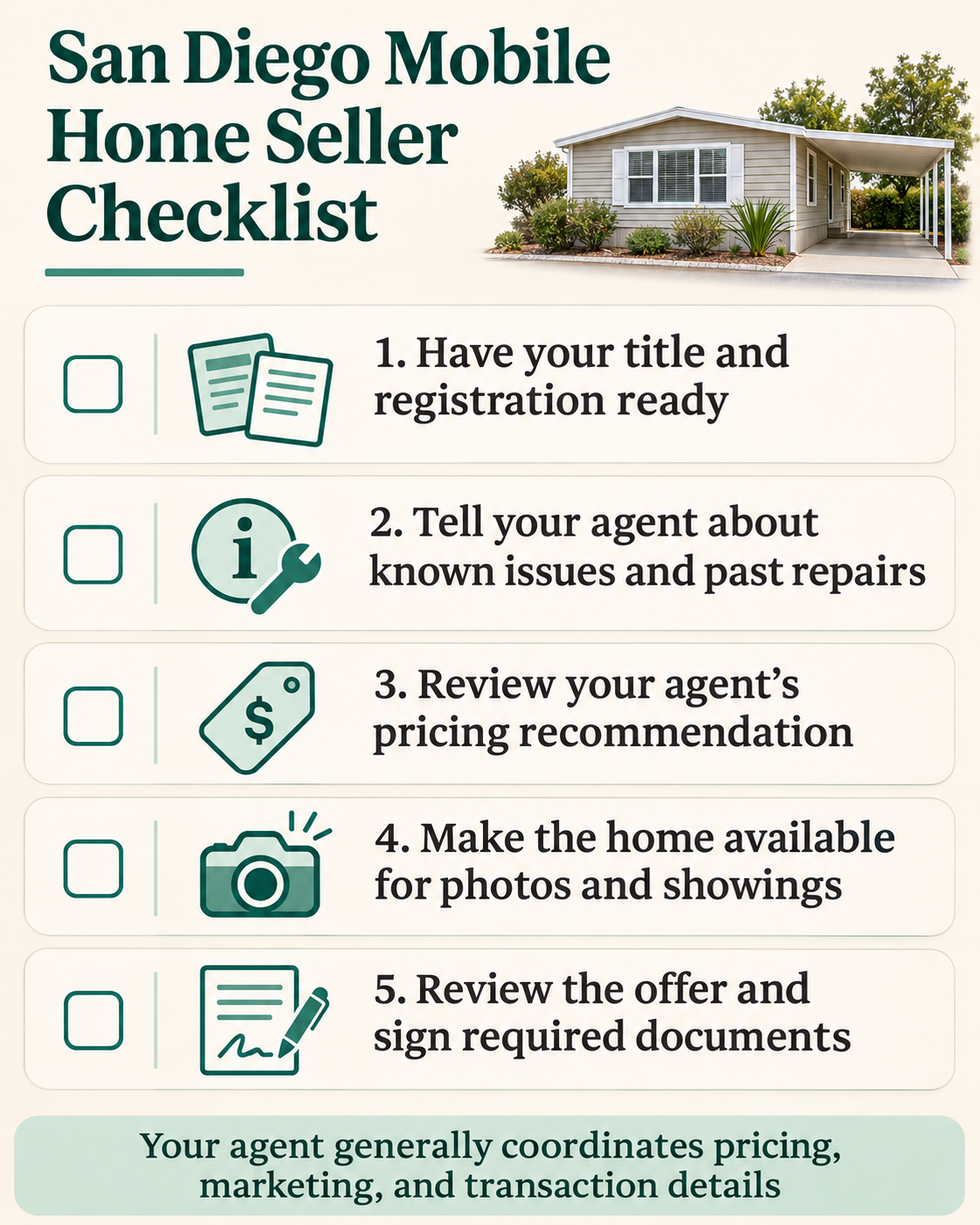
    Before listing an existing mobile home in a San Diego park, have your current title and registration ready for your mobile home sales agent. Share what you know about the home’s condition, including known problems, past repairs, and features that come with the home. The agent can review the ownership documents, advise on price, and coordinate the listing.

    Discuss whether to make repairs or sell as-is. Make the home available for photos and showings, review the offer with your agent, and provide the information and signatures needed for disclosures and closing. The agent works with escrow or transfer professionals to coordinate the paperwork.

    Have Your Title and Registration Ready

    Five seller actions covering title and registration, known issues and past repairs, agent pricing guidance, photos and showings, and offer review and signatures.
    Have documents ready, share accurate home information, review pricing guidance, allow photos and showings, and review the offer and sign required documents.

    For a home titled through California HCD, locate the current Certificate of Title and Registration Card and make them available to your mobile home sales agent.

    Your agent can review the title for registered owners and any listed lienholder, then help coordinate missing documents or lien releases. You may need to provide information or signatures. HCD requires a county tax-clearance certificate for a private sale of an HCD-titled home subject to local property tax.

    For a home titled and registered through HCD, use HCD’s ownership-transfer process. A home recorded as a real-property improvement under California’s foundation and recordation process transfers differently. Ask your agent to check the records if this might apply. Owning the land or having a foundation does not by itself establish real-property status.

    If you’re deciding whether to list, you can request a free Mobile Home Value Review by sharing your home’s details with our team. We’ll review your information and follow up to discuss its potential market value. This is not an appraisal or a guaranteed sale price.

    How Park Sale Requirements Are Coordinated

    For a mobile home that will stay in the park, California requires the seller or their agent to notify park management before the sale closes. Confirm with your agent who will give the notice. Management may separately require approval of the buyer for residency.

    Once both parties have accepted an offer, the buyer and their agent typically work with park management on space rent, park rules, the rental agreement, and the buyer’s residency application. The buyer can ask management for the park rules earlier.

    California limits the repairs or improvements a park can require as a condition of sale. If management raises a condition or exterior issue, ask your agent to review the written requirement.

    Review Your Agent’s Pricing Recommendation

    Your mobile home sales agent typically provides recent comparable sales and a suggested asking-price range. Review that information together; the most useful comparables are often recent sales of similar homes in the same park.

    The ownership arrangement matters: a home sold with land is not directly comparable to a home sold on a leased park space. Even among parks, location, park quality, and space rent can affect what buyers are willing to pay.

    Compare the home’s age, size, layout, condition, and included features with the homes that sold. If your agent uses sales from other parks, ask how their amenities and buyer demand compare. San Diego’s median house price is not a substitute for park-home comparables.

    Discuss the recommended asking price with your agent before deciding how to position the home. Overpricing may discourage buyers, while underpricing can reduce your proceeds.

    Discuss Repairs or Selling As-Is

    Tell your agent about known defects, past repairs, and anything that may need attention. Together, discuss whether modest repairs before listing make sense, such as fixing broken screens or damaged fixtures. Not every seller needs to renovate or repair the home before listing.

    If practical, clean and declutter the home and tidy the entry, carport, patio, and other areas that are actually present. Your agent can advise whether any additional presentation work would be worthwhile.

    You may decide to sell the home as-is. Repairs may not pay for themselves, and an as-is sale does not remove applicable seller disclosure obligations.

    Choose an Agent Who Knows Mobile Homes

    Consider working with a mobile home sales agent who has experience with existing homes in San Diego parks. These transactions can involve title and registration, park residency procedures, and other details that differ from a home sold with owned land.

    Ask how the agent handles title and registration review, provides same-park comparable sales and pricing guidance, arranges listing photos, and coordinates transaction documents and escrow.

    Before hiring an agent, ask about their mobile-home experience, how they’ll communicate with you, and how they plan to reach interested buyers.

    Your mobile home sales agent normally coordinates the listing, photography, and marketing. You do not need to independently create the listing or gather comparable sales.

    Make the home available for photographs and showings, and share accurate details about its size, layout, features, upgrades, condition, and known repair needs. The agent can arrange photos of the interior, exterior, carport, and other applicable features and prepare the listing from that information.

    Before the listing goes live, check that it accurately describes what comes with the home and that you understand the plan for showings.

    Review an Offer With Your Agent

    When an offer arrives, review the proposed price, financing terms, and timing with your agent. Consider whether those terms work for you before deciding.

    Loan options and lender requirements depend on the home, its title status, the transaction, and the buyer. Your agent can help explain any financing-related conditions in the offer, while the lender makes the financing decision.

    The agent can help provide documents about the home if the lender asks. The buyer handles their own financial information and loan requirements.

    Ask your agent to explain your estimated proceeds after applicable selling and transaction costs before accepting the offer.

    Share Disclosures and Sign Closing Documents

    Your agent and escrow or transfer professionals generally coordinate the closing paperwork, title transfer, and key handover. As the seller, be available to provide requested information, review documents, and sign where required.

    Provide any additional information or signatures needed for HCD transfer or tax documents. Your agent can help prepare the Manufactured Home and Mobilehome Transfer Disclosure Statement and other applicable forms, but you remain responsible for accurate disclosures and required signatures. If the home stays in the park and management requests the statement in writing, the homeowner must provide a copy.

    Before signing, ask which documents need an original signature or notarization and when they’re due.

    Once escrow or the transfer professional confirms the closing conditions and funds, arrange key delivery with your agent.

    Make the home available for an agreed final walk-through and set aside any manuals or warranties for items included in the sale.

    Conclusion

    Set aside your title and registration and jot down known problems and past repairs. Bring both to a conversation with a San Diego mobile home sales agent so you can decide what’s worth fixing before photos and when to list.

  • How to Write a Mobile Home Listing That Attracts Buyers in San Diego

    How to Write a Mobile Home Listing That Attracts Buyers in San Diego

    How to Write a Mobile Home Listing That Attracts Buyers in San Diego

    Write a clear, accurate listing that helps San Diego buyers assess the home and its features. State the number of bedrooms and bathrooms, square footage, layout, and relevant details about the home’s title and registration. Gather HUD label information when applicable to the manufactured home. Describe specific upgrades, energy-saving features, outdoor space, and nearby schools, parks, shops, or amenities.

    Use bright, tidy photos of the exterior and each room so buyers can see the home’s condition and layout. Set the asking price by comparing your home with similar mobile homes, not single-family houses. Post the listing where mobile home buyers search, and include clear contact details.

    Gather Details for Your San Diego Mobile Home Listing

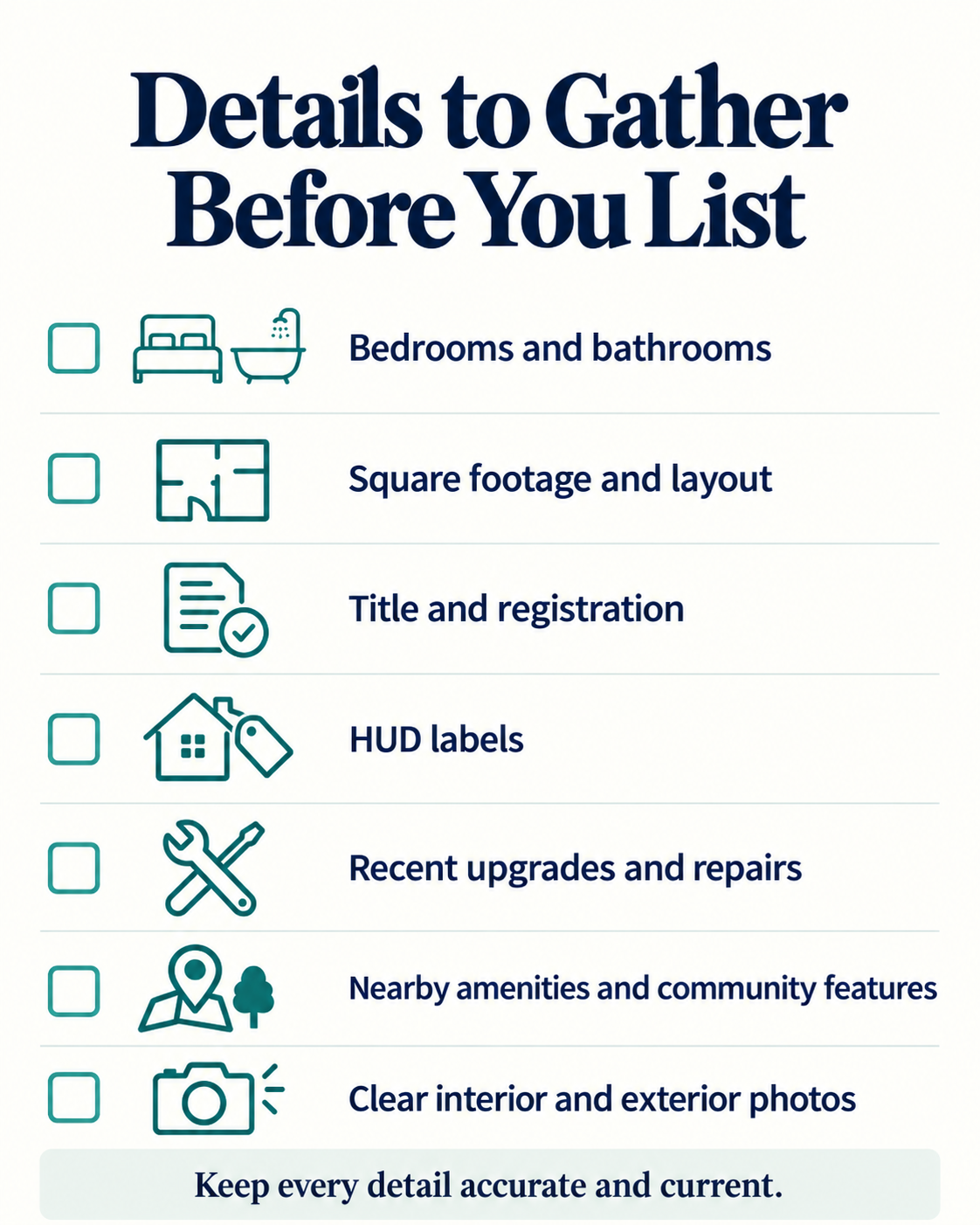
    Checklist of mobile home listing details including bedrooms and bathrooms, square footage and layout, title and registration, HUD labels, upgrades and repairs, nearby amenities, and photos.
    Gather the facts buyers are most likely to look for before you write the listing.

    Gather the details buyers need to assess your San Diego manufactured home: the number of bedrooms and bathrooms, square footage and layout, title and registration information, and HUD label information when applicable.

    Clear, organized information helps buyers understand the home’s layout, features, and basic identifying details.

    Keep your title and registration information available, and note the home’s HUD labels when applicable so you can provide accurate information if buyers or others involved in the transaction ask for it.

    Prepare clear photos of the interior and exterior, and keep information about recent upgrades and repairs accurate.

    Save detailed descriptions of improvements and standout features for the section on highlighting your home’s best features. Before listing, you can request a free Mobile Home Value Review. Our team will review the details you provide and follow up to discuss your home’s potential market value.

    Highlight the Home’s Best Features and Upgrades

    Highlight the features and upgrades that make your San Diego mobile home appealing.

    Describe energy-efficient windows or appliances, which may reduce utility costs, and recent updates such as fresh paint, new flooring, or modern fixtures.

    Point out practical features, such as an open floor plan, outdoor living space, or community amenities.

    Mention safety-related updates, including new roofing or plumbing, and explain what was replaced or repaired.

    Describe nearby attractions, schools, and parks to help buyers understand the home’s setting and lifestyle options.

    Write a Description Buyers Can Picture

    Help buyers picture daily life in your San Diego manufactured home. Describe how the rooms, upgrades, and outdoor space could fit their routines, such as relaxing in a bright living room or dining on the patio.

    Include room and patio measurements so buyers can plan where furniture might go. Mention nearby parks, pools, shops, schools, transit, or neighborhood attractions when those details apply.

    Describe the home’s standout features and community amenities clearly.

    Professional photos can show details that words cannot, and a thoughtful asking price can help attract buyer interest.

    Choose Photos That Show the Home at Its Best

    Choose bright daytime photos to show your San Diego mobile home clearly. Before taking pictures, tidy each room and arrange the furniture to show how the space is used.

    Take wide shots that reveal the layout, along with closer views of key features such as updated appliances.

    Photograph outdoor areas in daylight, and include community amenities if they’re available. If you have completed renovations, before-and-after photos can show the changes.

    Use sharp, well-lit images of clean, organized spaces from several angles. Choose photos that help buyers see the manufactured home’s features and imagine living there.

    Set a Competitive San Diego Listing Price

    Compare recent sales of similar San Diego mobile homes to set a competitive asking price. Look for manufactured homes with similar locations, sizes, condition, upgrades, energy features, and access to community amenities.

    Use current MLS listings and sales to see how your home compares.

    Do not assume that a strong single-family market will bring a high price for a mobile home. Rising inventory and longer selling times can affect buyer demand.

    Consider pricing near or slightly below comparable sales to attract buyers, but treat that as a strategy, not a guarantee.

    Spring may bring more buyer activity, but seasonal timing doesn’t guarantee a higher sale price.

    Weigh the likely benefits of listing then against your home’s condition and current competition.

    Where to Post Your Mobile Home Listing

    To reach buyers in San Diego, post your manufactured home on platforms where people search for homes, local listings, and specific communities.

    Using more than one channel can help you connect with different types of buyers, including nearby residents, investors, and first-time homebuyers.

    Zillow and MHVillage attract people searching for mobile homes.

    Facebook Marketplace and Craigslist let you reach local buyers directly, while Realtor.com gives your listing broader exposure.

    You can also post on a mobile home park’s website or bulletin board to reach people interested in that community.

    Compare each platform’s audience and choose the ones that fit your home and the buyers you want to reach.

    Make Your Listing Easy to Find and Contact You

    Use relevant search terms, such as “mobile home for sale in San Diego,” in your listing title and description.

    Post the listing on multiple online platforms, including social media, to help more buyers find it.

    Add clear, well-lit photos of the home’s interior and exterior.

    Describe its distinctive features and nearby amenities so buyers can picture what living there might be like.

    Include your phone number or email and invite buyers to ask questions.

    Whether you sell on your own or work with an agent, make sure buyers know how to contact you or your agent.

    Conclusion

    Write a clear listing that helps buyers picture your San Diego manufactured home. Describe its features and condition, and include accurate details about the home, including its size, layout, title and registration information, and HUD labels when applicable.

    Use bright, accurate photos and set an asking price that reflects competing listings. Share the listing where interested buyers can find it, and include a clear way to contact you. These steps can help attract serious inquiries, though they cannot guarantee a sale.

  • How to Photograph a Mobile Home for Sale in San Diego

    How to Photograph a Mobile Home for Sale in San Diego

    How to Photograph a Mobile Home for Sale in San Diego

    Clean and declutter each room before taking photos. Put away personal items, tidy the patio, carport, and other outdoor areas, and arrange furniture so rooms look open and easy to navigate.

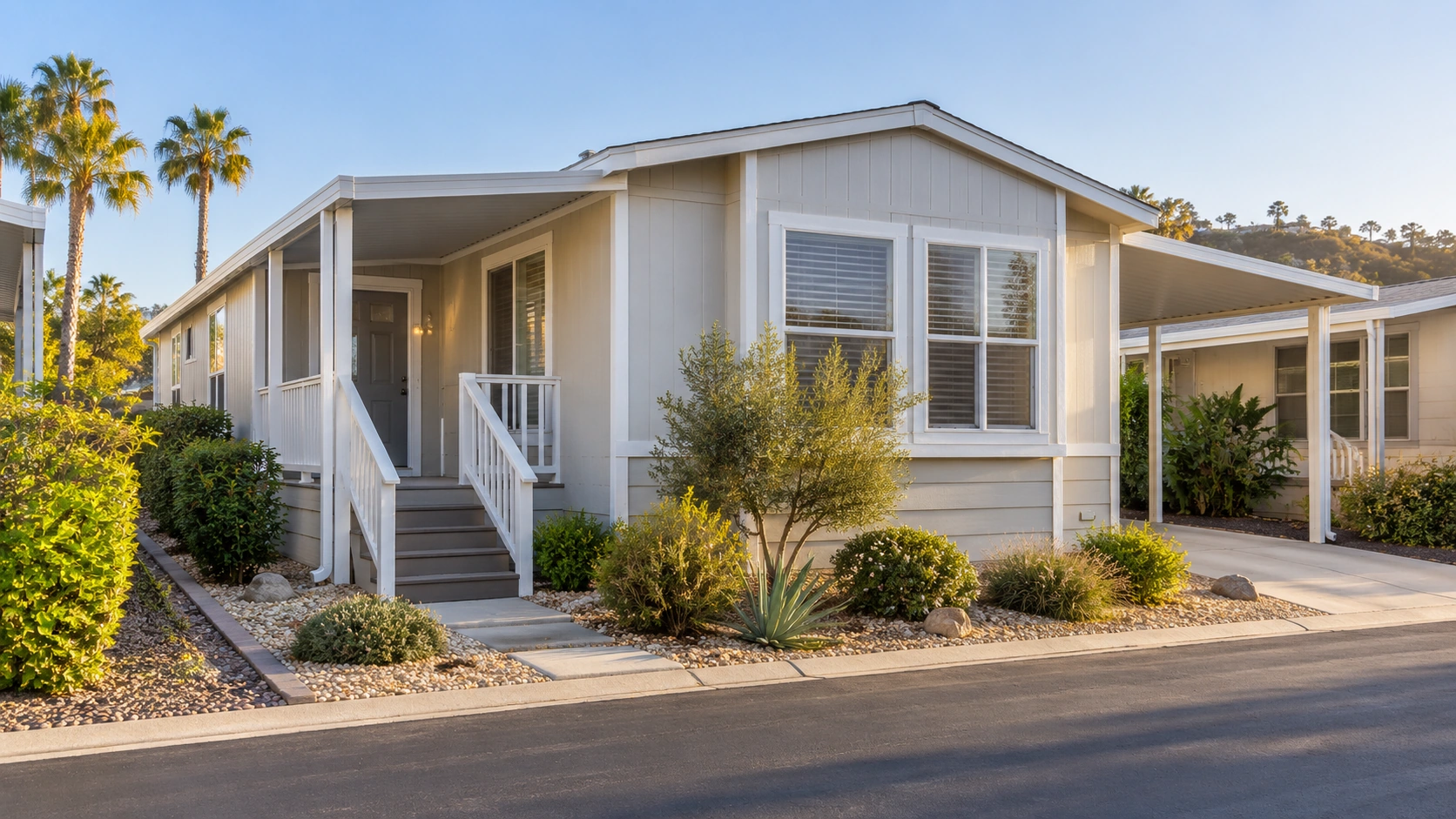
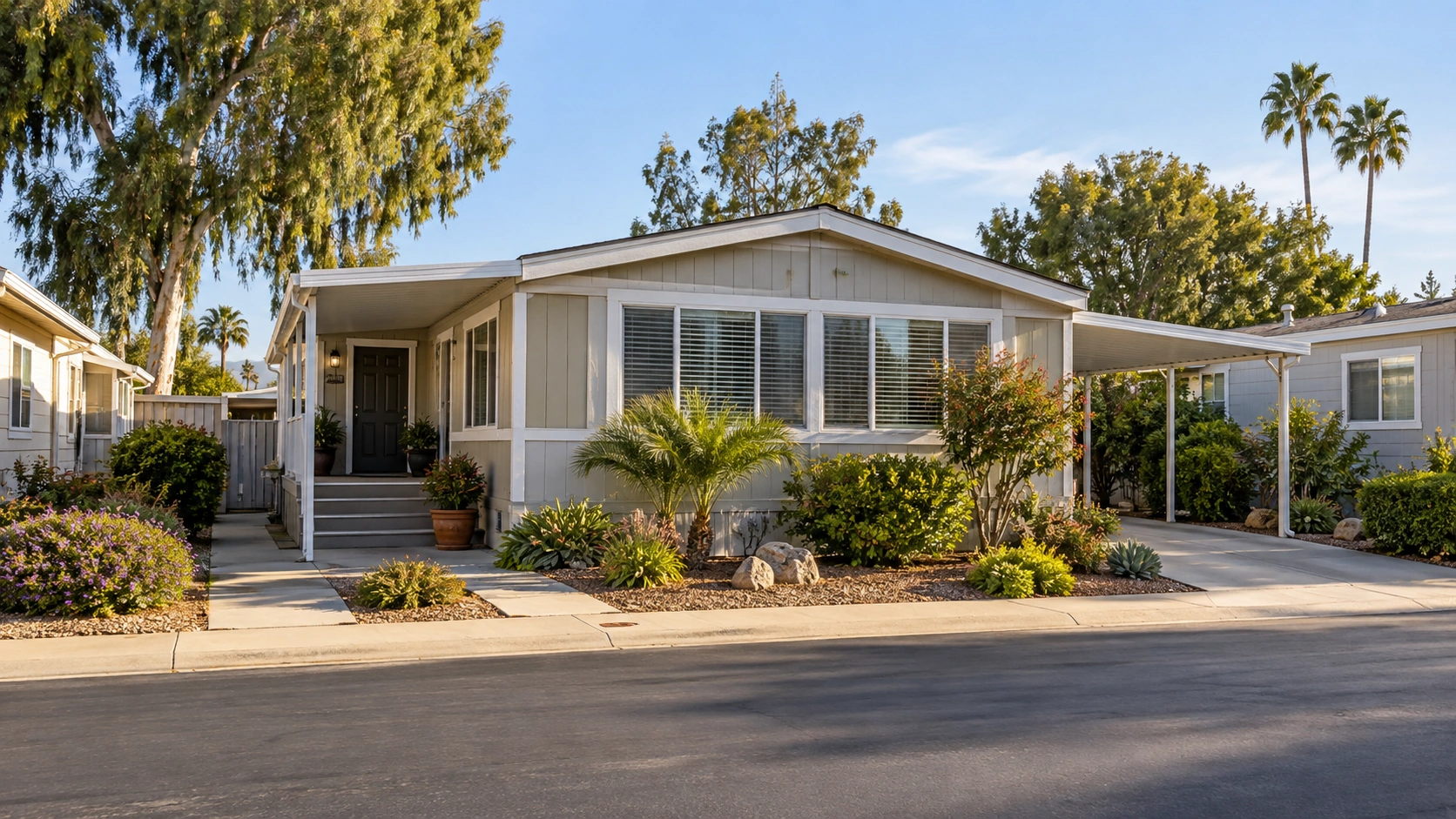
    Use soft natural light by shooting on a clear morning or in late afternoon. Open the curtains and photograph the manufactured home’s exterior, patio, carport, landscaping, and standout features.

    Before submitting the photos, check the MLS rules. Include a clear exterior image and leave out people, pets, and signs.

    Prepare Your Mobile Home for Listing Photos

    Clean and declutter your mobile home before taking listing photos.

    Put away family photos, pet belongings, and other personal items so buyers can imagine living there. Clear countertops and tidy each room to keep attention on the home’s layout and features.

    Prepare the exterior by sweeping the patio and carport, trimming plants where needed, and removing debris or other clutter from outdoor areas.

    Make the entry welcoming and check that the exterior looks well maintained.

    Before the photo session, walk through the home and put away anything that distracts from its best features. If you are also planning your asking price, you can request a free Mobile Home Value Review. Our team will review your home details and follow up.

    Choose the Best Time for San Diego Photos

    Photograph your mobile home during golden hour, shortly after sunrise or before sunset. The softer light can bring out its colors and details while reducing harsh shadows.

    Avoid midday sun, which can create strong contrast. Choose a clear day for brighter colors, and check the forecast before scheduling. Overcast skies may make the photos look dull.

    Spring and early fall often bring pleasant weather and vibrant landscaping.

    Pick a day when the light and surroundings help your home look welcoming.

    Photograph Your Mobile Home’s Exterior

    Photograph your manufactured home in soft morning or late afternoon light. A clear front view helps buyers see the home.

    Keep people and signs out of the frame.

    Take additional photos of features buyers may value, such as the patio, carport, porch, landscaping, and other outdoor amenities.

    Tidy the patio, carport, and other outdoor areas and put away personal items before you shoot.

    Check that each photo is clear, then submit the images within 72 hours of entering the listing in the MLS.

    Capture Bright, Spacious Interior Photos

    Open the curtains and take photos during the day to make each room look bright.

    Clear away clutter and personal items so buyers can see the room’s size and layout.

    Use a wide-angle lens to show more of each space, and arrange furniture to leave clear paths and show how the room can be used.

    Choose soft, neutral decor to keep the focus on the room.

    For San Diego Real Estate listings, bright, spacious photos can help manufactured homes stand out and help buyers picture themselves living there.

    Showcase Your Mobile Home’s Best Features

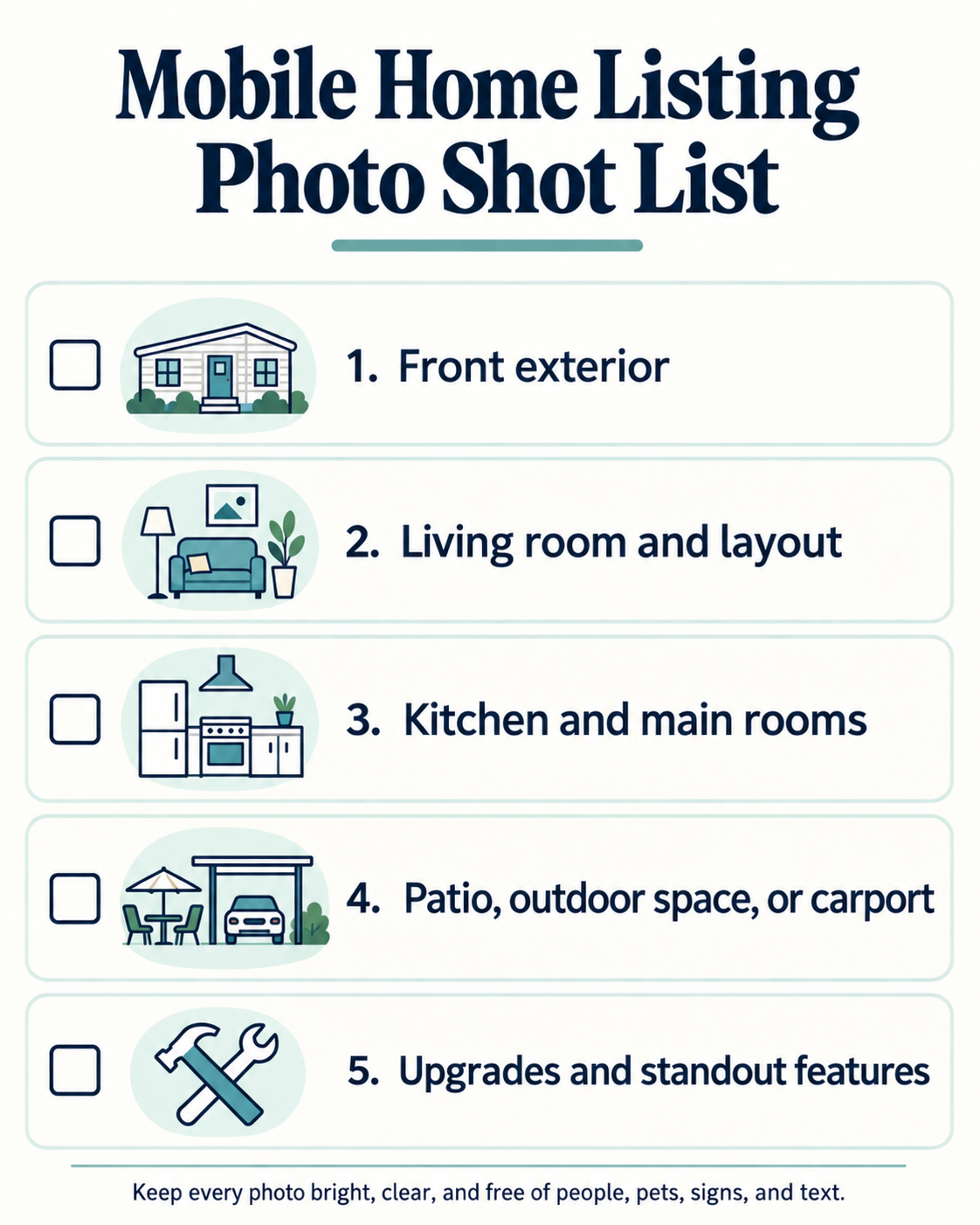
    Mobile home listing photo checklist covering the front exterior, living room and layout, kitchen and main rooms, patio or outdoor space, carport, and notable upgrades.
    Capture the front exterior, main interior rooms, patio or outdoor space, carport, and standout features buyers need to understand the home.

    Showcase your mobile home’s best features with clear, well-framed photos. Photograph the exterior in bright natural light, then show how the main rooms and outdoor spaces look.

    Use wide shots to show the layout of kitchens and living rooms. Clear counters and floors before taking photos so buyers can focus on the space.

    Photograph the patio, carport, and other outdoor areas to show buyers how those spaces are arranged. Take close-ups of updated appliances and modern fixtures so buyers can see their condition and details.

    Choose angles that show the manufactured home’s space and character. Keep photos free of people, pets, signs, and other distractions.

    Check Photos for MLS Compliance

    Before submitting photos to the MLS, confirm that they follow its guidelines.

    Include at least one front exterior photo, but it doesn’t have to be the primary image. Each photo must show the property, its amenities, or a view from the property.

    Remove For Sale signs, people, pets, and text.

    You can submit up to 75 photos per listing. Choose images that clearly show the home and its features, and check each one before submission.

    Only your broker or agent can submit the photos. They must do so within 72 hours of entering the listing in the MLS.

    Decide When to Hire a Listing Photographer

    Once your photos meet MLS requirements, consider hiring a professional if you need polished images, have limited time, or want help with lighting and composition.

    A photographer who knows manufactured home listings can highlight features such as an open floor plan, patio, carport, or other outdoor space.

    Before booking, compare packages and ask how many edited images they include. Confirm the photographer’s experience with mobile homes, whether they can meet your deadline, and when they’ll deliver the photos.

    Drone photos can show the home and its surroundings from above. Ask whether the photographer offers them and whether they suit your listing.

    Strong photos may attract more buyers and support a faster sale or higher offers, but they don’t guarantee either.

    Conclusion

    Use bright, clear photos to help buyers see the manufactured home’s layout and condition. Tidy each room, open the blinds, and photograph during daylight. Capture the front exterior, each main room, the patio or outdoor space, the carport, and features such as built-in storage or a renovated kitchen.

    Before uploading, confirm that the photos meet MLS requirements and show the property accurately. If you lack time or want help, hire a listing photographer familiar with San Diego mobile and manufactured homes. Clear photos can encourage buyers to schedule a showing.

  • What to Know About Park Approval When Selling a Mobile Home in San Diego

    What to Know About Park Approval When Selling a Mobile Home in San Diego

    What to Know About Park Approval When Selling a Mobile Home in San Diego

    If the buyer plans to keep your manufactured home in a San Diego park, the park may require prior approval for the buyer to occupy the space. Park management may review their income, credit, rental history, and references. This screening concerns the buyer’s occupancy; it does not determine your right to sell the home.

    A buyer who plans to move the home out of the park usually won’t need approval to occupy a space there. Contact park management early to confirm its application requirements and review timeline. The screening process may affect the closing or move-in date.

    When Does a Mobile Home Sale Need Park Approval?

    California law allows park management to require prior approval of a buyer when the manufactured home will remain in the park.

    The approval applies to the buyer’s right to occupy the space, not to your right to sell the home.

    If the buyer plans to move the mobile home out of the park, park approval generally isn’t required for the sale.

    Check your rental agreement and applicable state law to understand what applies to your transaction.

    How Does Park Screening Work in San Diego?

    If the buyer plans to live in the park, management may screen them before approving a space rental.

    The park’s decision affects the buyer’s right to rent the space, not your ability to sell the home.

    The manager may review the buyer’s application, income, credit history, rental references, and ability to follow park rules.

    Screening practices vary by park and must comply with applicable California law, including fair housing protections.

    To help avoid delays, ask the buyer to contact park management early about the screening process and timeline.

    Which Documents Can the Park Request?

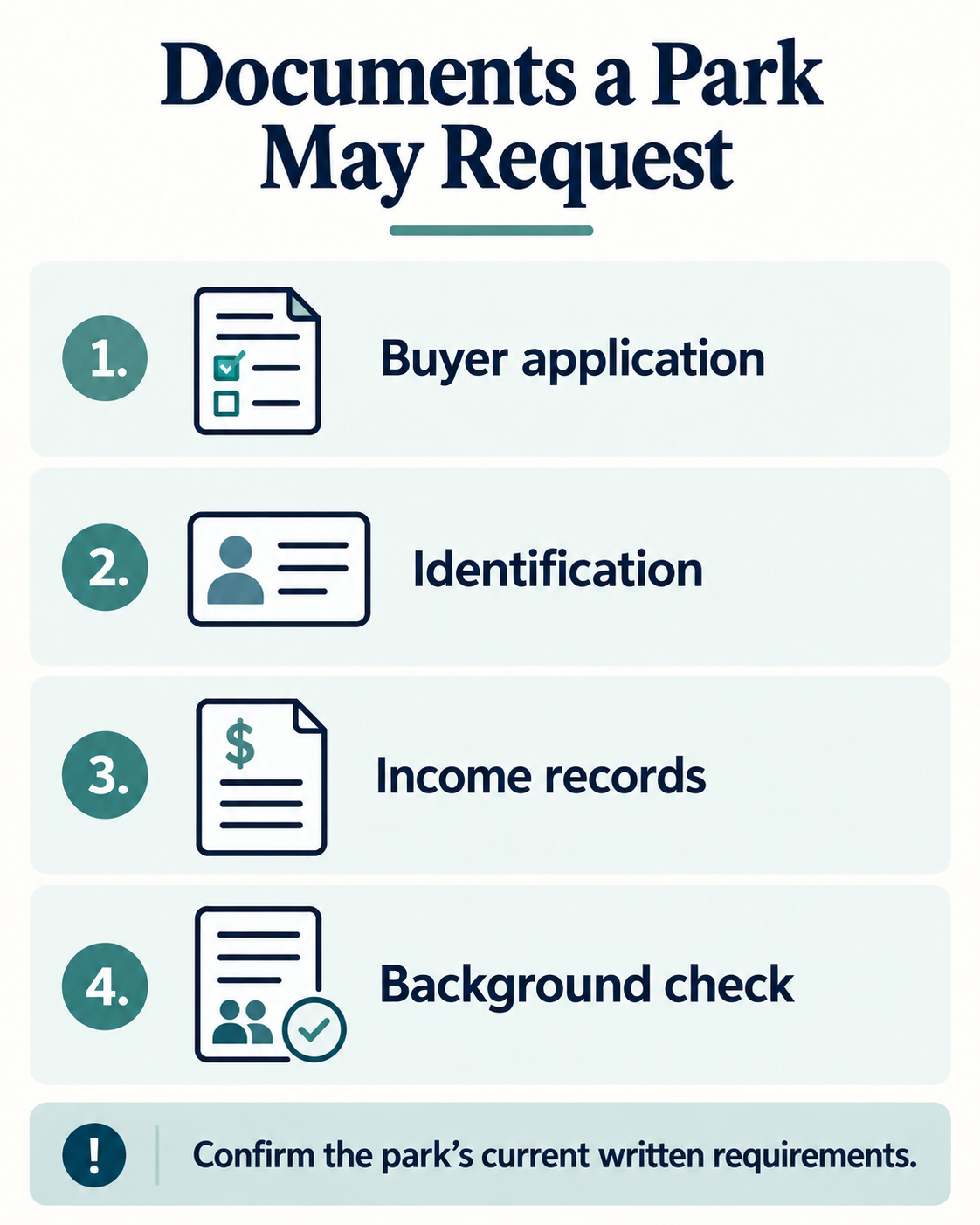
    Checklist of four document categories a mobile home park may request: application, identification, income records, and background check.
    Document requests vary by park. Ask management for its current written requirements before submitting personal information.

    What documents can park management request? A park may ask a prospective buyer for documents to review the application, subject to applicable law and park rules.

    Ask management for its current written requirements before sending personal information.

    The requested documents may include:

    1. Application: The park’s buyer application.
    2. Identification: A government-issued ID to confirm the buyer’s identity.
    3. Income records: Pay stubs, benefit statements, or other records showing the buyer’s ability to pay space rent.
    4. Background check: Information or authorization the park requests for a background check, if applicable.

    Requirements vary by park. Management cannot require personal income tax returns or documents beyond those on the written list it provides under California law.

    Share documents securely, and seek qualified advice if a request seems improper.

    How Can You Prepare Your Buyer for Screening?

    Share the park’s written screening requirements and application timeline with your buyer early.

    Explain which forms to complete, where to submit them, and what documents or information the park requests, such as identification, income records, or information needed for a background check.

    If screening includes an interview or background check, explain what the buyer can expect and who to contact with questions.

    Encourage accurate, complete answers, and direct questions about the requirements to park management.

    Don’t promise approval or interpret the park’s rules for them.

    You can help keep communication moving between the buyer and the park, with the buyer’s consent and respect for their privacy.

    How Can Park Approval Affect Your Sale Timeline?

    Park approval can delay your manufactured home sale because the community may need time to review the buyer’s application, verify documents, and arrange an interview.

    The closing date may depend on how long those steps take, so plan for a possible wait.

    • Submit early: Ask the buyer to apply as soon as possible.
    • Check requirements: Confirm that the park has all required forms and documents.
    • Track progress: Follow up with park management if the review takes longer than expected.
    • Keep plans flexible: Coordinate the closing and moving dates with the park’s review schedule.

    Allowing extra time can help you avoid last-minute changes.

    Keep the buyer and park management informed as the review progresses.

    What If the Park Denies Your Buyer?

    If the park denies your buyer, management must provide both you and the buyer with written notice of the rejection and its reason.

    Review the park’s screening criteria, application process, and any options for addressing the rejection. California law limits the reasons a park may withhold approval. If the stated reason is the buyer’s financial ability to pay park charges, the buyer may provide additional financial or asset information for management to consider.

    Share the reason with your buyer.

    If the application has missing information or errors, they may be able to correct them. If park management does not approve the buyer’s residency application, review the explanation and your sale agreement before deciding what to do next.

    Consult a California attorney or qualified housing adviser if you suspect discrimination or another legal violation.

    Conclusion

    Check the park’s approval process early when selling a manufactured home in San Diego. Rules and timelines can vary by park, so ask management what the buyer must submit and when.

    Share the requirements with your buyer and keep track of application deadlines. A denial may affect your sale timeline. If the park rejects the buyer, ask for the reason and whether there are next steps or an appeal process. Don’t assume approval is automatic.

    Ready to sell your mobile home in San Diego? Contact San Diego Mobile Home Guide to discuss your sale and the park approval steps that may affect your timeline.

  • Should You Repair or Sell Your Mobile Home As-Is in San Diego?

    Should You Repair or Sell Your Mobile Home As-Is in San Diego?

    Should You Repair or Sell Your Mobile Home As-Is in San Diego?

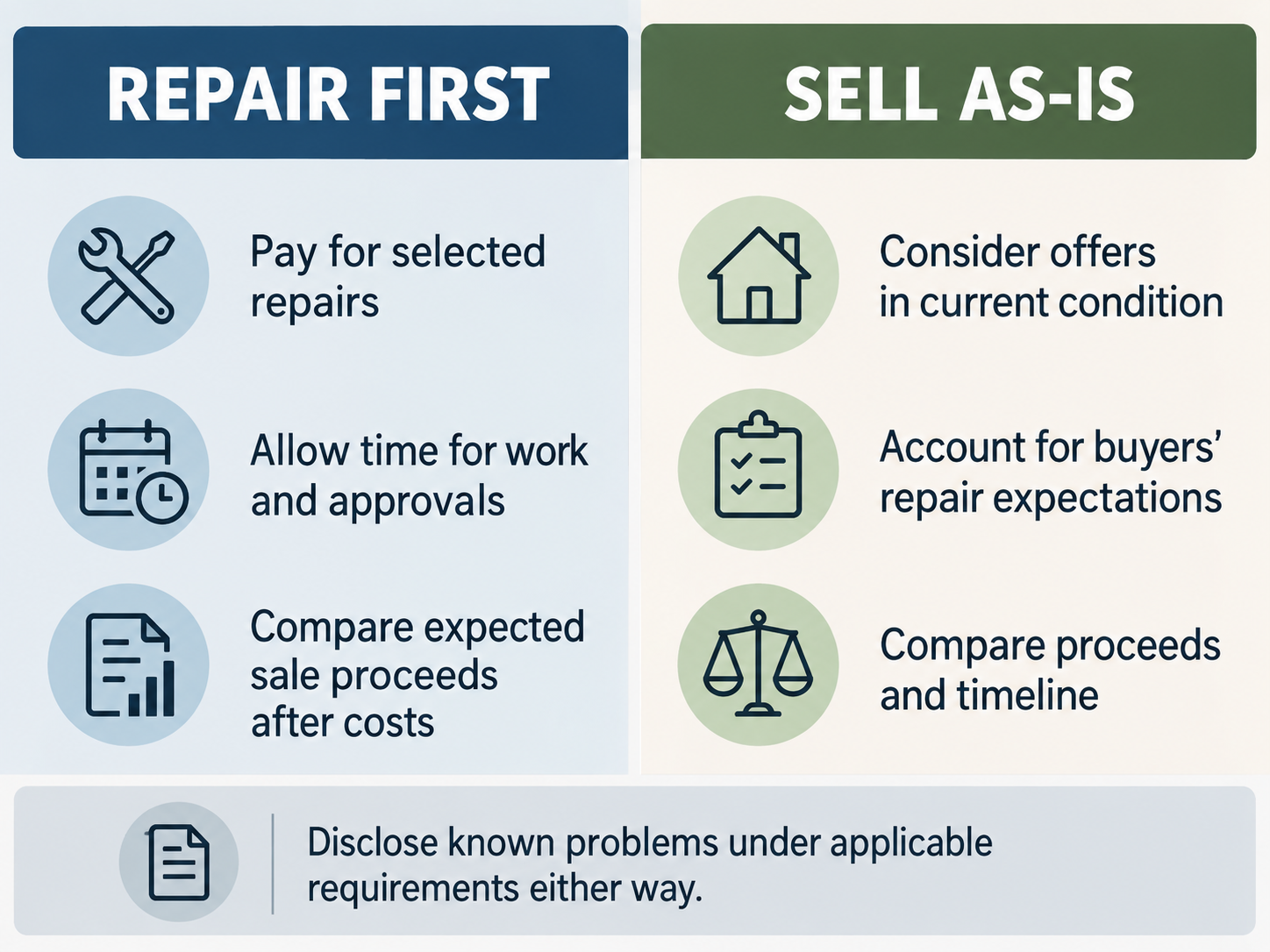
    Repair the manufactured home before selling when the expected increase in its sale price justifies the repair costs and time involved, including any needed approvals. A pre-listing inspection can identify essential work, such as fixing a visible leak. Compare contractor estimates with the likely sale price after repairs before committing.

    Small, visible fixes, such as fresh paint, may make the home more appealing without major work. But if repairs are costly, park rules delay the work, or you need to sell quickly, selling without completing those repairs may be more practical. Buyers may offer less for a home that needs work, but you avoid paying for the repairs and waiting for them to finish. Get estimates for both options to compare the likely proceeds and timeline.

    Should You Repair or Sell Your Mobile Home As-Is?

    In this guide, repairing before selling versus selling as-is refers to whether you complete improvements before putting your mobile home on the market. Making selected repairs does not prevent you from selling the home in its current condition afterward. An as-is sale generally means the seller is not agreeing to make additional repairs, subject to the purchase agreement and applicable requirements.

    Even when a manufactured home is offered as-is, buyers may request repairs or a reduction in price after reviewing its condition or completing an inspection. Sellers can consider, negotiate, or decline those requests, subject to the purchase agreement. The buyer’s options will depend on the contract and any applicable contingencies. This is why pricing the home appropriately for its condition is important, regardless of whether you make repairs beforehand.

    Decide which repairs, if any, are worth completing before listing by comparing their cost and timing with the likely benefit. If you need cash quickly, selling without completing additional repairs may avoid the delay of managing the work.

    A pre-listing inspection can identify defects, helping you document known problems and set a realistic asking price. Cash buyers may consider homes that need work, but their offers depend on the home’s condition and market value.

    Repairs don’t have to mean a full renovation. Fresh paint or basic landscaping may make the home more appealing without a major expense.

    Before starting work, list the repairs you’d make, estimate their cost, and consider how long they’d take. Then compare that effort with the likely benefit and your timeline. If you would like help considering how your home’s condition and improvements may affect its value, request a free Mobile Home Value Review. Our team will review the details and follow up.

    How Do Repair Costs Compare With Sale Value?

    Side-by-side comparison of repair-first and as-is mobile home sales, covering costs, timing, potential proceeds, and disclosures

    There is no fixed return on repairs: the effect on the sale price depends on the home, the work, and comparable sales. Minor cosmetic updates and routine maintenance may make the home more appealing, but they do not guarantee a higher price.

    Before starting major work, compare recent sales of similar manufactured homes with your expected sale price after repairs. Then weigh that estimate against the full repair cost. For example, a roof or HVAC replacement may not pay off if the likely increase in sale price falls short of the project cost.

    A pre-listing inspection can identify which repairs are most important and help you set a fair asking price.

    You can also compare selling without completing additional repairs with repairing first, since some buyers prefer homes that need work.

    Will Park Rules Change Your Repair or Sale Plan?

    Check your park’s rules and any permit requirements before scheduling repairs. Management may require approval for certain work, and review delays can affect when you list your home.

    Ask which repairs need approval and how long the process usually takes.

    Then compare the cost and timing of approved repairs with selling the home in its current condition. For example, if approval would delay your sale or the rules prevent a repair you planned, listing without completing that work may be more practical.

    Ask management to identify any sale-related repair requirements in writing and explain their basis under park rules and applicable law. Unresolved issues may affect buyer interest.

    Which Mobile Home Repairs Attract San Diego Buyers?

    Prioritize repairs that make a manufactured home look cared for and comfortable to live in. Start with visible problems: fix leaks, replace worn flooring, and repair or update damaged fixtures. These changes can help buyers focus on the home rather than a list of immediate repairs.

    Next, improve the kitchen and bathroom, where worn faucets or outdated appliances can make a home feel less ready to move into. Replace items that are damaged or no longer work well; cosmetic upgrades matter less than clean, functional rooms.

    Fresh exterior paint and neat landscaping improve the first impression at showings. Before buyers arrive, deep-clean the home and clear clutter so they can see the space and its condition.

    Energy upgrades may also appeal to buyers who want lower utility bills. Consider efficient windows, added insulation, or updated HVAC equipment. Keep records of the work so buyers can understand what was changed.

    When Does Selling a Mobile Home As-Is Make Sense?

    Selling your mobile home without completing additional repairs may make sense when the likely increase in sale price would not cover the repair costs or justify the time involved. You avoid paying for renovations, but buyers will consider the home’s condition when deciding what to offer.

    In San Diego, cash buyers and investors may be interested in manufactured homes that need work, though serious repair needs can narrow your pool of potential buyers.

    Before listing, compare repair estimates with the home’s after-repair value. Then compare any as-is offers with its current market value. Disclose known problems in writing and complete any applicable disclosure forms; an as-is sale does not eliminate disclosure obligations.

    Remember that selling as-is does not prevent a buyer from requesting a lower price or asking for repairs. A buyer may discover additional issues during an inspection or decide that the cost of needed work is greater than expected. Whether the seller agrees to a price adjustment or repair request is a matter of negotiation, subject to the purchase agreement and applicable requirements.

    An as-is sale can also spare you the time and stress of managing a major project. It may be practical for an inherited home or one that needs significant updates, especially if you want to avoid coordinating repairs before closing.

    How Do You Set a Competitive San Diego Price?

    Compare recent sales and active listings for similar homes in your mobile home park to set a competitive asking price. Recent sales show what buyers have paid; active listings show the prices your home will compete with.

    Compare manufactured homes with similar condition and features, rather than relying on listings alone.

    Assess your home’s age, needed repairs, and overall appeal, especially if you plan to sell it without completing additional work.

    Check the park’s requirements and fees, too. These may shape buyers’ interest and the price they’re willing to offer.

    Set a price that can attract attention when the home first goes on the market. If buyers don’t respond, use their feedback and updated comparisons to decide whether to adjust the price.

    Selling time varies with the home, the park, the asking price, buyer financing, and any required park approval; do not assume a fixed timeline.

    Should You Choose a Cash Sale or a Listing?

    A cash sale may be faster, while listing your mobile home may reach more buyers. Choose based on whether a simpler sale or the chance to receive a higher net offer matters most.

    Both cash buyers and buyers who find your home through a traditional listing may purchase it in its current condition. Some cash buyers may be willing to take on more repair work, but their offers generally account for the home’s condition and expected expenses. Buyers using either approach may request repairs or negotiate the price. Compare the actual offers, terms, and likely net proceeds rather than assuming one approach eliminates repair negotiations.

    Closing time still depends on title paperwork, any liens, park approval, and the parties’ readiness. A cash offer may be lower than what a listing could bring, depending on the home and market conditions.

    Compare the offer with what you could reasonably expect from a listing, after accounting for likely repair costs and the time needed to sell.

    Listing puts your manufactured home in front of more buyers, which may lead to competing offers in a strong market. Minor repairs can improve the home’s appearance and give buyers more confidence, but they add costs and time.

    Before listing, decide which repairs are worth making and compare those costs with the possible benefit of a higher sale price.

    What Paperwork Do You Need to Close the Sale?

    Gather the documents needed to transfer ownership, disclose known problems, and address any tax or registration requirements.

    Before signing, check each document with the buyer so you can correct missing or inaccurate information.

    Prepare the certificate of title, current registration card, and applicable California HCD transfer forms. A bill of sale can document the transaction and may be needed in certain cases, but it is not required for every transfer.

    Complete the applicable forms accurately and keep copies for your records.

    Complete applicable mobilehome transfer disclosures and identify known defects in writing. Check whether the manufactured home requires a tax clearance certificate or other tax or registration documents based on its tax status.

    If the home will remain in a mobile home park, notify management before closing and ask about the buyer’s residency application and rental agreement. Park approval can affect the sale timeline.

    Conclusion

    Selling without completing additional repairs may make sense when the likely increase in sale price would not justify the costs involved. Making selected improvements before listing does not prevent you from selling the home as-is afterward. Before deciding, compare repair estimates with recent sales and check whether your mobile-home park has rules that affect a sale or buyer approval.

    Gather your title and other required paperwork so you can confirm what you need to transfer ownership. Then compare your selling options: a cash buyer may be willing to purchase the manufactured home in its current condition, while a listing may reach more buyers. Either approach can involve repair requests or price negotiations.

    Choose based on your budget, timeline, and willingness to handle repairs or buyer requests. Avoid paying for upgrades unless you have a clear reason to expect them to raise the sale price enough to cover their cost.

  • How to Set an Asking Price for a Mobile Home in San Diego

    How to Set an Asking Price for a Mobile Home in San Diego

    How to Set an Asking Price for a Mobile Home in San Diego

    Set your asking price by comparing your mobile home with recent sales in the same park or nearby communities. Look for homes with similar size, age, and condition. If one sold for more but had a newer roof or updated plumbing, account for those differences rather than treating the sale price as a direct match.

    Inspect your home’s roof, plumbing, and electrical systems, and list needed repairs alongside visible upgrades. Estimate repair costs so you can decide whether to complete the work before listing or reflect it in the asking price.

    Compare monthly park fees, lease terms, location, and amenities with those of similar homes. These factors can change what buyers are willing to pay, even when two homes have similar features. If you find few comparable sales, ask a local agent or appraiser to help assess the price.

    After listing, track buyer questions and offers. If buyers repeatedly point to the same repair or cost, consider whether your price or listing details need adjustment.

    How Do You Price a Mobile Home in San Diego?

    Start with recent sales of similar mobile homes in nearby San Diego communities. Compare homes with similar condition and location to estimate a reasonable asking price; asking prices alone don’t show what buyers have paid.

    Next, inspect the home’s roof, plumbing, and electrical systems. List needed repairs and account for their likely cost when setting your price. For example, a buyer may offer less for a home that needs a roof repair than for a comparable home in move-in condition.

    Also compare the home’s location within the park, community features, park fees, and lease terms. A desirable spot may draw more interest, while higher monthly fees or less favorable lease terms may lead buyers to offer less.

    A professional appraisal can provide another estimate based on the home and available sales data. You can also request a free Mobile Home Value Review. Our team will review your home’s details and follow up to discuss its potential market value.

    Which San Diego Mobile Homes Make Good Comparables?

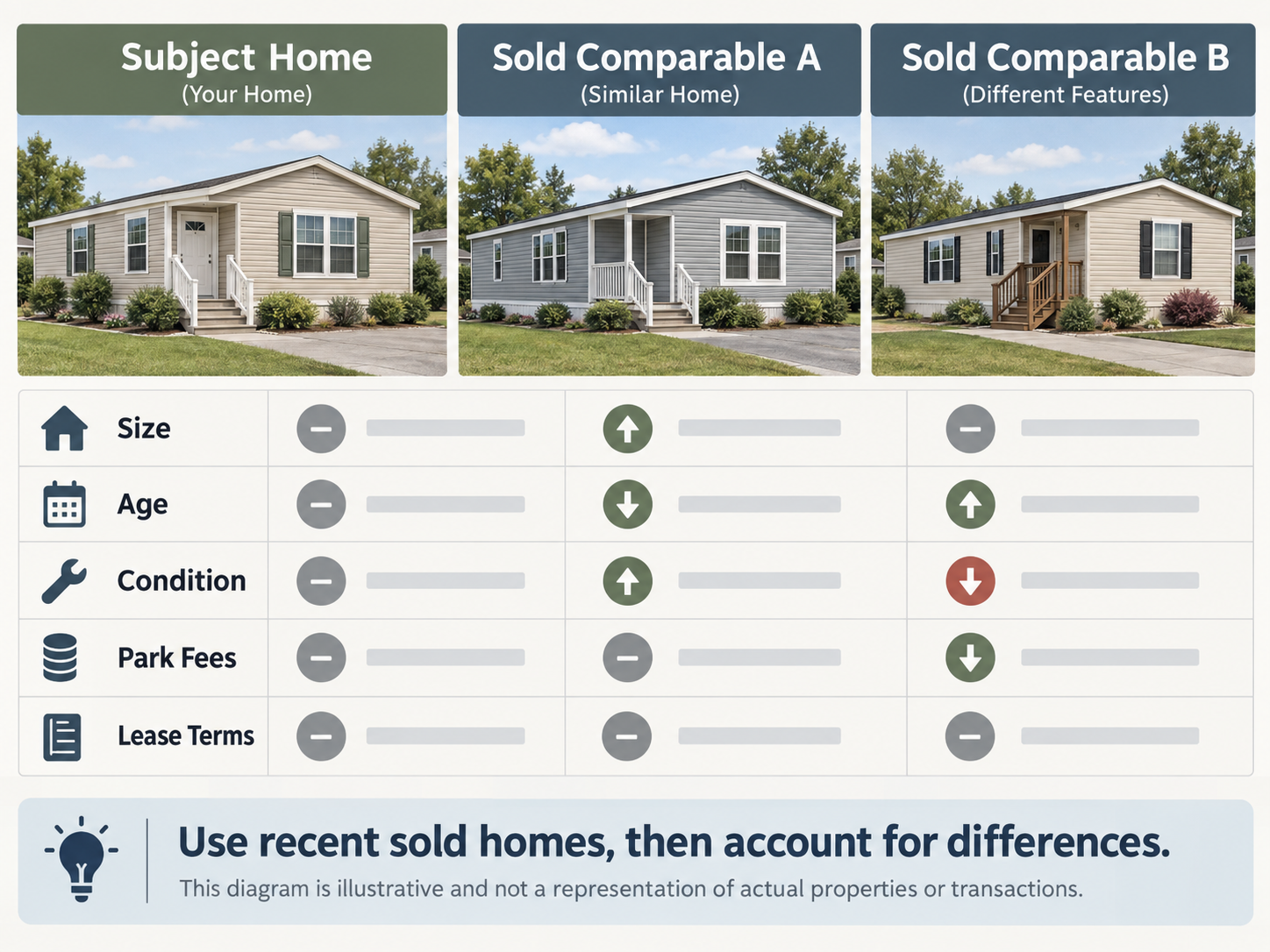
    Comparison diagram showing a subject manufactured home alongside two sold comparables and key pricing factors
    Compare recently sold homes by size, age, and condition, then account for differences in park fees and lease terms.

    Use recent sales of mobile homes in the same neighborhood or community as yours. Nearby homes are more likely to share local conditions that influence sale prices, making them more useful comparisons than homes elsewhere in San Diego.

    Match each sale to your home by size, age, and condition. For example, compare homes within the supplied range of 700 to 1,500 square feet, then note whether one has been updated or needs repairs.

    Check sales from the past six months so your comparisons reflect recent market activity.

    Compare community features and rules as well. A shared pool or clubhouse may distinguish one community from another, while rules may affect which buyers can purchase there.

    Record these differences alongside each sale to see which homes are the closest matches.

    How Do Condition and Upgrades Affect Price?

    A home’s condition and upgrades affect its asking price, but buyers may not pay extra for every improvement. Before choosing a price, inspect the structure, plumbing, electrical systems, and roof. Then compare the home with similar manufactured homes of a similar age and condition.

    Focus on upgrades buyers can see and use, such as modern appliances, efficient windows, or a renovated bathroom. These improvements may support an asking price 10% to 15% higher, but they don’t guarantee a higher sale price. A sound roof and recent repairs can also reassure buyers; keep records of the work to show what’s been done.

    Age matters because homes built in the 1970s and 1980s may need updates to meet current buyer expectations. List any needed repairs alongside completed improvements, then set the price to reflect the home’s actual condition.

    Count upgrades only when they’re likely to matter to buyers.

    How Do Park Fees and Lease Terms Affect Price?

    Park fees and lease terms can shape your asking price because buyers weigh the monthly cost and the rules attached to the home. In San Diego, park fees often range from $500 to $1,200 a month. A higher fee leaves buyers less room in their budgets for the purchase price, so compare your fee with what it covers before setting your price.

    Lease terms can also affect how many buyers consider the home. A longer lease or permission to sublet may suit buyers who want more flexibility; restrictions may narrow the pool. Before listing, check the lease for its term, renewal conditions, subletting rules, and any other limits buyers would need to follow.

    Tell buyers what the park fee pays for, such as maintenance or community amenities. This helps them judge whether the fee is worthwhile and compare the total monthly cost with other homes.

    Favorable fees and lease terms may support a higher asking price, but they don’t guarantee a particular resale price.

    When Should You Get a Local Appraisal or Agent’s Advice?

    A local appraisal or agent’s advice can help you price a San Diego mobile home when comparable sales are scarce or your home has features that make comparisons difficult.

    Ask for guidance if recent sales don’t reflect your home’s location, condition, or community.

    An appraiser can compare recent sales and assess how your home’s condition and location differ from those properties.

    An agent familiar with mobile homes can explain current buyer demand and how park amenities, fees, and reputation may shape what buyers are willing to pay.

    Before setting an asking price, ask a local specialist to review comparable sales and identify repairs or upgrades that buyers may consider.

    Share details about your home and park so the advice reflects the factors that distinguish your property.

    How Should You Set and Adjust Your Asking Price?

    Compare recent sales of mobile homes similar to yours in size, age, and condition to set a realistic starting price. Use those sales as a guide, then adjust for differences between the homes rather than relying on asking prices alone.

    Price your home’s upgrades based on their condition and usefulness. Modern appliances or recent renovations may support a higher price than similar homes without them, but they don’t guarantee buyers will pay the full cost of the work.

    Check current demand before setting your price. If interest in San Diego mobile homes is rising, you may have more room to ask a higher price; if buyer interest is weaker, a more competitive price may attract more showings.

    Include your park’s amenities and fees in your comparison. Buyers may weigh those fees against features the park offers, so compare your home with others in parks that have similar costs and amenities.

    After listing, track showing feedback and how long the home stays on the market. If few buyers request showings or feedback points to price, compare your asking price with recent sales again and consider a reduction.

    Conclusion

    Set your asking price by reviewing recent sales of similar mobile homes in San Diego. Compare homes with similar size and condition, then account for differences such as repairs, upgrades, park fees, and lease terms. Park fees and lease terms can change a buyer’s monthly costs, so compare them alongside the sale prices.

    Online estimates may miss those details. If comparable sales are hard to interpret, ask a local agent or appraiser to review them. Once listed, track showings and offers: if buyers show little interest or offers come in below your asking price, reassess the price and adjust it promptly.

  • How to Prepare a Mobile Home for Sale in San Diego

    How to Prepare a Mobile Home for Sale in San Diego

    How to Prepare a Mobile Home for Sale in San Diego

    Prepare your San Diego mobile home by inspecting it from the roof to the foundation. Repair leaks, electrical hazards, plumbing problems, and pest damage. Deep-clean and declutter the home, stage each room, improve the exterior, and complete minor cosmetic repairs.

    Collect the documents buyers may need, including permits, title records, park documents, lease terms, and information about outstanding balances.

    Set the asking price by comparing recent local sales and considering the home’s condition, park fees, and current market trends. Advertise the home honestly online or work with a licensed agent. Review the additional selling tips below.

    Inspect Your Mobile Home Before Making Repairs

    Before making repairs, inspect the mobile home from top to bottom. Look for problems that could discourage buyers, such as roof damage, plumbing leaks, electrical issues, and termite damage.

    First, assess the home’s overall condition instead of trying to fix every problem at once. A professional home inspector can provide an objective assessment and point out repairs or improvements buyers may expect.

    Review the home’s age and maintenance history. Older properties may require a closer inspection. Document current concerns, past maintenance, and completed repairs.

    Clear records help you plan repairs, show responsible ownership, and prevent surprises that could reduce buyer confidence or lead to low offers. If you would like a personalized review before listing, request a free Mobile Home Value Review. Our team will review your home’s details and follow up.

    Fix Roof, Plumbing, Electrical, and Pest Issues

    Address the home’s most serious defects before listing it. Inspect the roof, repair plumbing leaks, correct electrical hazards, and arrange a pest inspection. In San Diego, completing these repairs can protect your asking price and reassure buyers considering manufactured homes.

    Start with the roof. Check the shingles, seals, and flashing for damage, and repair problems before they allow water to enter the home.

    Test every plumbing fixture, confirm adequate water pressure, and repair leaks. Have a qualified professional inspect the electrical wiring and correct any safety hazards.

    Schedule a licensed pest inspection and treat termites or other pest problems promptly.

    Keep all invoices, permits, inspection reports, and warranties. Sharing these records shows that you maintained the home responsibly, builds buyer trust, and helps support your asking price.

    Clean, Declutter, and Stage Every Room

    Clean and stage the home after completing major repairs. A clean, orderly space helps buyers see the home’s condition during showings.

    Deep clean every room, with extra attention to the kitchen and bathrooms. Remove personal items and excess furniture from living areas to create more open space and help buyers imagine their belongings there.

    Choose neutral decor and arrange each room to draw attention to its strongest features.

    Improve curb appeal by tidying the exterior, mowing the lawn, and placing welcoming potted plants near the entrance.

    Repair small distractions, such as chipped paint and squeaky doors, so the mobile home appears cared for rather than neglected.

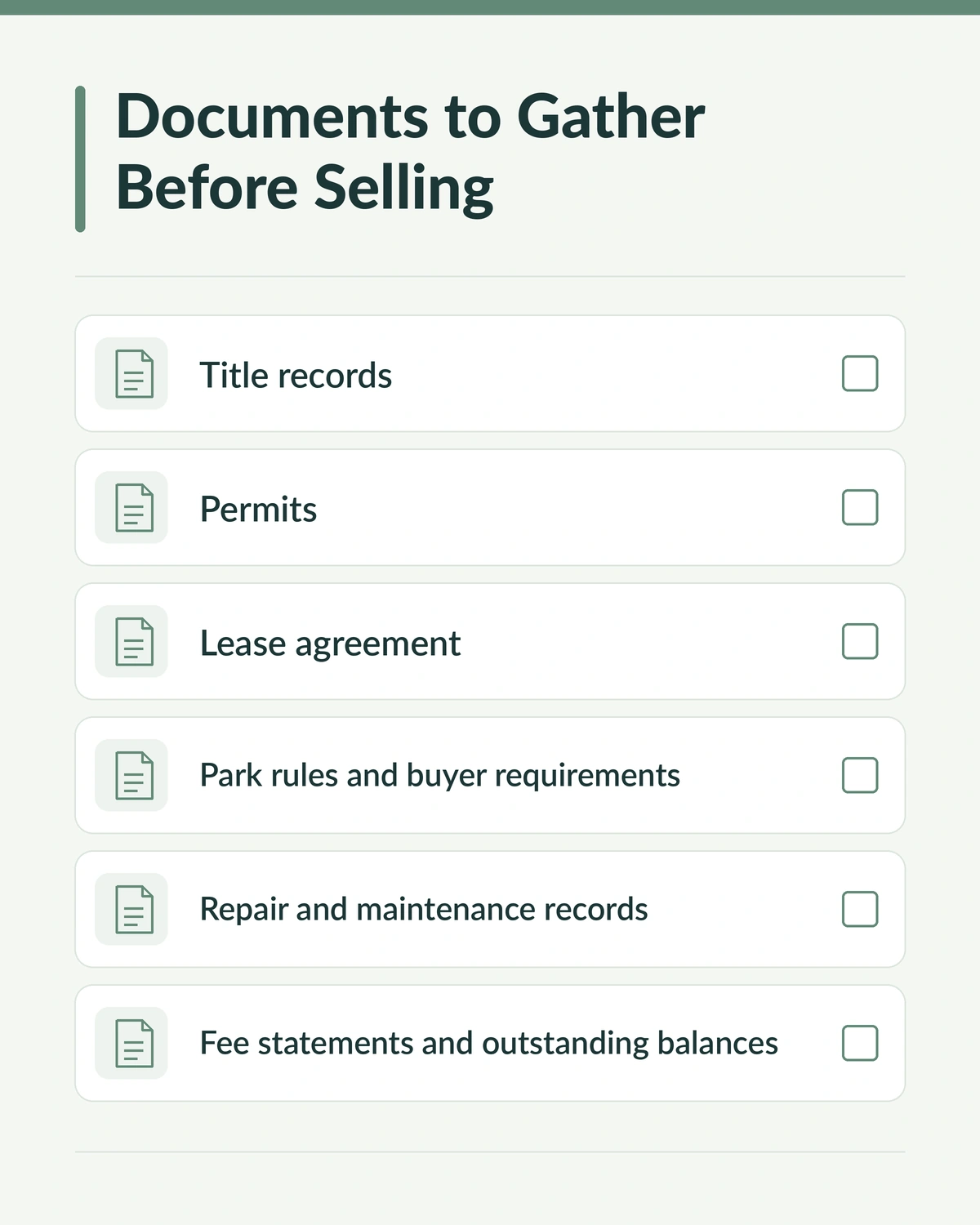
    Gather Permits, Title, and Park Documents

    Checklist of title, permit, park, lease, repair, and fee records to prepare before selling

    Gather permits, title records, and park documents early to prevent avoidable delays during the sale.

    In San Diego, collect permits for installation, alterations, and zoning compliance. Confirm that your title is current and ready for transfer to the buyer.

    Organize the following park documents:

    1. Your lease agreement and community rules.
    2. Park guidelines and buyer approval requirements.
    3. Repair records, maintenance receipts, and fee statements.

    Review any outstanding assessments or balances, and disclose them accurately.

    Keep the original documents secure, and provide clear copies when requested.

    Contact the park office or the appropriate local agency if any paperwork is missing, outdated, or unclear.

    Complete records can help the buyer move through the park’s approval process without delays.

    Price and Market Your San Diego Mobile Home

    Set an asking price by comparing your mobile home with recent sales in your San Diego park and nearby communities. Review each home’s condition, location, park fees, and sale price. Use these comparisons and current market trends to choose a price that attracts buyers and protects your equity.

    Describe the home’s features and condition clearly in every listing. Mention unique features, recent upgrades, and desirable park amenities so buyers can see what sets the home apart.

    Prepare the home before showing it. Clean every room, remove clutter, and arrange the space to create a welcoming setting. A tidy, well-presented home helps buyers assess its condition and envision living there.

    Advertise on online platforms and local listings that serve mobile home parks. These outlets can connect you with buyers who are already searching for homes in San Diego communities.

    Consider working with a licensed mobile home agent who knows the San Diego market. An experienced agent can help set the price, market the property, and negotiate with buyers.

    Conclusion

    Prepare your mobile home for sale by checking its condition, completing necessary repairs, and gathering the required documents. Inspect the home for structural or safety problems, address pest issues, and repair visible damage before showing it to buyers.

    Clean and declutter every room, then arrange the space so buyers can imagine living there. A simple, orderly presentation can help them see the home’s layout and features more clearly.

    Collect the title, permits, and park documents before setting the asking price. Review comparable mobile homes in San Diego to choose a price that reflects the home’s condition and location.

    Use accurate property information, clear photos, and targeted marketing to reach serious buyers. These steps can help you manage the sale with confidence and avoid delays.