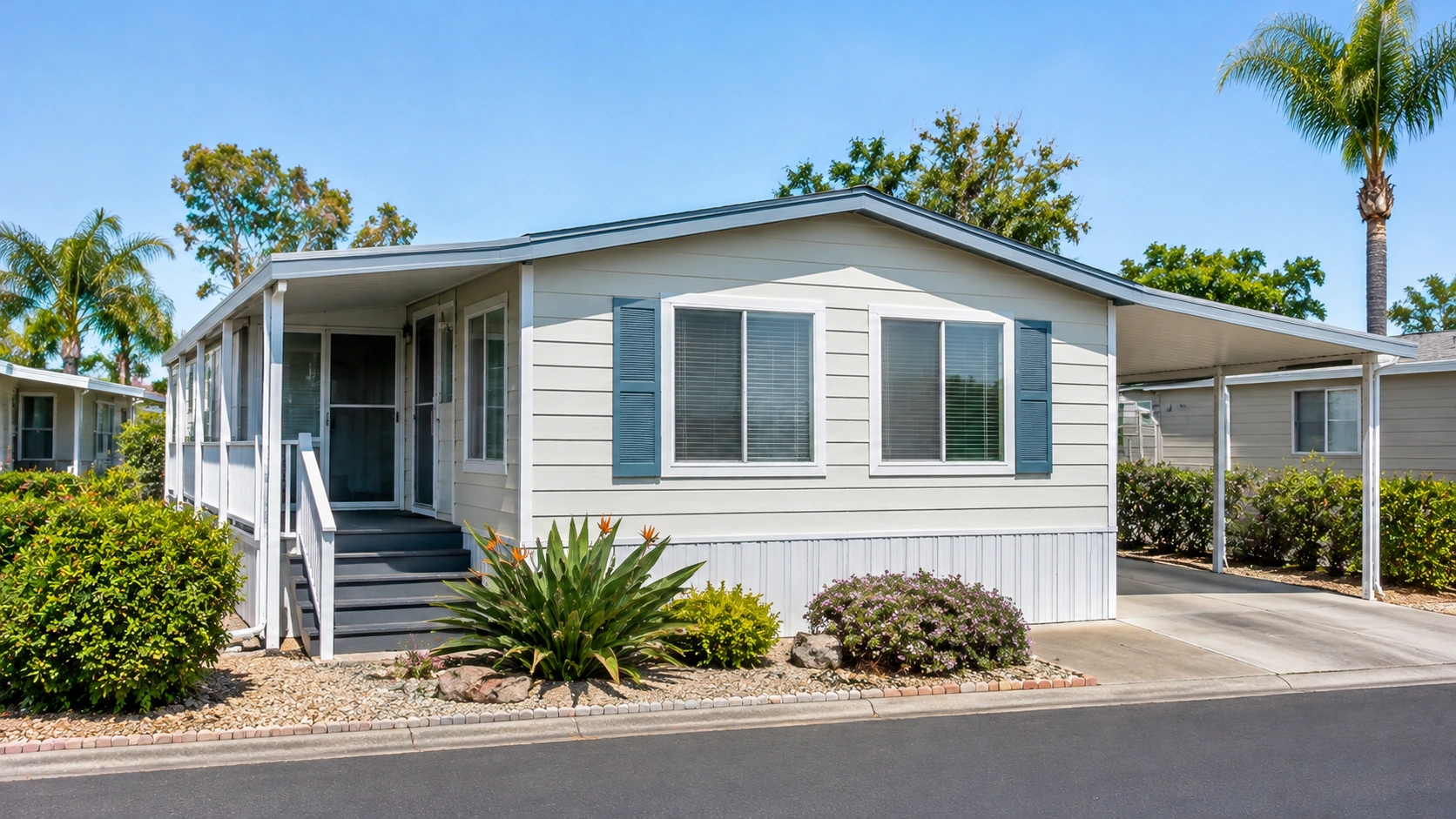
How to Sell a Mobile Home by Owner in San Diego
To sell your mobile or manufactured home by owner in San Diego, first confirm whether you are selling a home in a mobile-home park on a rented space or a home with land. Review the home’s current title and registration, any outstanding loan or lien, and the park’s rental agreement and rules when applicable. Use recent sales of similar homes in the same park whenever possible to set an asking price, then prepare the home and organize the transaction documents.
A homeowner can sell a used mobile home in a park without hiring the park manager as the sales agent. For a home that will remain in the park, park management may review the prospective buyer’s residency application, but that is separate from your right to sell the home. You must notify management of the sale before closing. For assistance with selling, visit SD Mobile Home Guide.
Check San Diego Park Rules and Land Ownership
Before setting a price or scheduling showings, confirm whether the sale includes the home only or both the home and the land.
If the home is in a San Diego mobile-home park, review the rental agreement and written park rules. Ask management how it handles prospective residents, occupancy requirements, and any applicable sale-related paperwork. A park may screen the purchaser for residency, but it cannot require you to use park management as your sales agent.
For a home that will remain in the park, the seller or seller’s agent must notify park management of the sale before closing. If management identifies any work it says is required as a condition of the sale, ask for the written explanation and its basis; California law limits park-required repairs and improvements.
If the sale includes land, review the deed and relevant property records, and confirm whether the home is classified and recorded as real property rather than assuming it is.
Price Your Mobile Home for the San Diego Market
Start with recent sales of comparable homes in the same park, when available. Compare home age, size, layout, condition, repairs, upgrades, and included features.
Do not assume a nearby park automatically provides comparable prices. A park’s location, upkeep, quality, amenities, buyer demand, and space rent can materially affect what buyers will pay, even when two parks are close together.
For a home sold with land, use sales with a similar land-ownership arrangement rather than comparing it directly with a home on leased park space. If relevant sales are limited, a local mobile-home agent or qualified appraiser may help evaluate the differences.
Prepare Your Home and Sale Documents
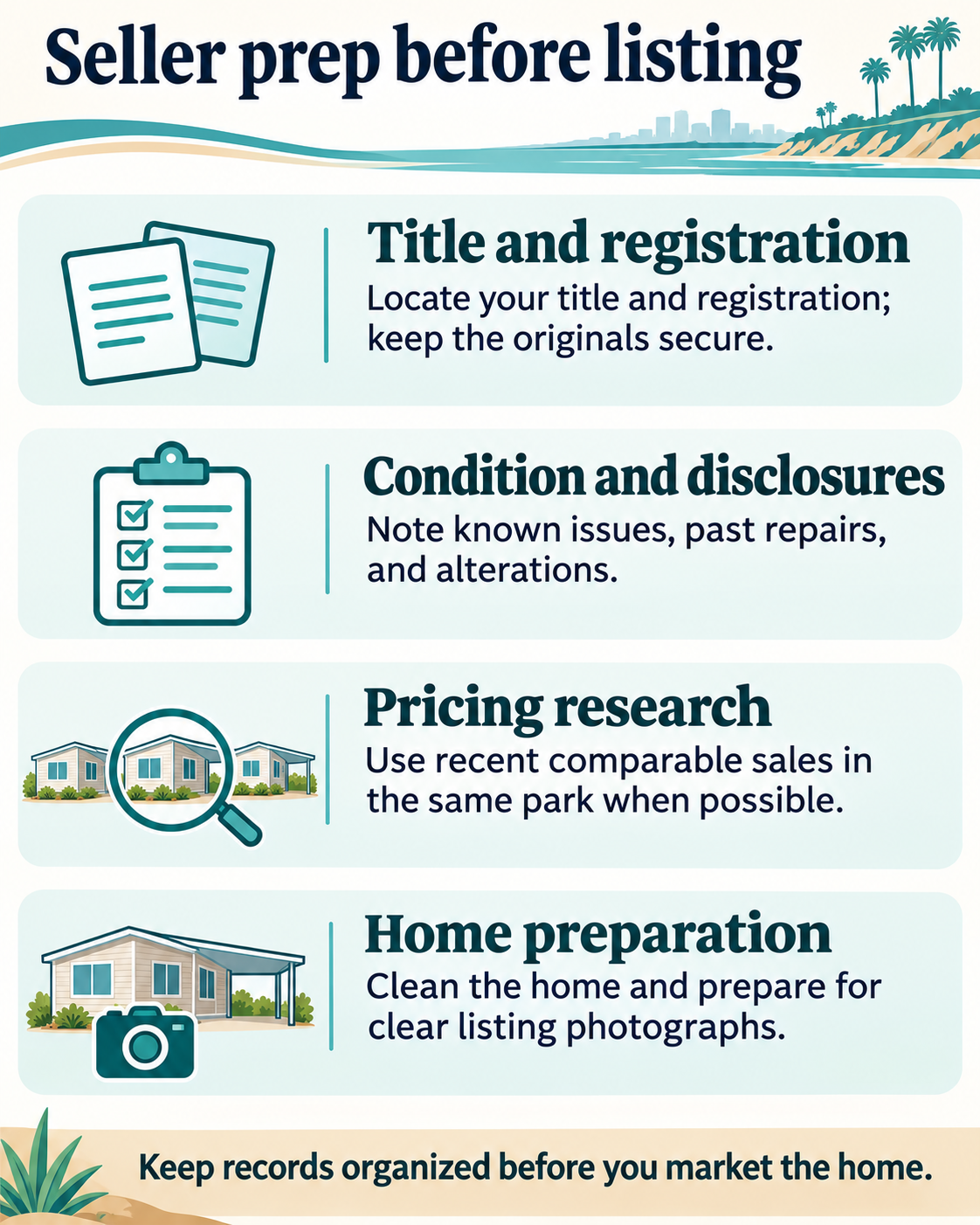
Clean the home, remove clutter, and address small repairs you decide to make before showings. Photograph the exterior, living areas, kitchen, bathrooms, bedrooms, and carport or patio if present.
Locate the current Certificate of Title and registration card, verify the owner information, and check for a recorded legal owner or lienholder. If the title or registration is missing, or ownership information is inconsistent, contact the California Department of Housing and Community Development (HCD) for the appropriate replacement or transfer process.
Keep original ownership documents secure while the transaction is being arranged. Make available information about known repairs, upgrades, and included appliances. For a park home, park-specific rent, rules, and residency details should be confirmed with management for the particular home and space when the transaction reaches that stage.
Complete California Mobile Home Disclosures
For a manufactured home or mobilehome sold in a mobilehome park, California’s resale disclosure requirements include the Manufactured Home and Mobilehome Transfer Disclosure Statement. Accurately disclose known defects, past damage, repairs, alterations, and other matters covered by the applicable form; selling as-is does not remove applicable disclosure duties.
When a home will remain in the park, park management may request a copy of that disclosure statement in writing. If the sale includes land or involves a different legal ownership arrangement, confirm which additional or different disclosure requirements apply rather than assuming every property uses the same paperwork.
Keep copies of completed disclosure documents and consult the current California forms or a qualified professional when a special circumstance is involved.
Advertise Your Home and Screen Buyers
Advertise the mobile home using clear photographs and an accurate description of its location, size, layout, condition, and included features. For a park home, identify the space-rent information you currently have, while making clear that the buyer should confirm the current, space-specific terms with park management.
You may advertise a home that will remain in a park without appointing management to sell it. Follow reasonable rules for arranging access and showings, and do not promise that a prospective buyer has been accepted for residency.
Ask prospective buyers about their purchase timeline and whether they understand that financing and park residency are separate processes. Protect personal information and arrange safe showings.
Compare Offers and Set Sale Terms
Evaluate offers for price, proposed financing, contingencies, closing timeline, and the buyer’s understanding of the park residency process if the home is in a park.
Put the accepted terms in a written purchase agreement, including the price, deposit, included appliances or other items, contingencies, expected closing date, and how closing costs will be handled. An offer does not itself mean that park residency screening or lender review is complete.
Keep copies of all signed agreements and coordinate any lien payoff or release as part of the transaction.
Coordinate Park Residency and Transfer Ownership
For an existing park home that will stay in the community, the prospective buyer completes any personal residency application and screening required by park management. Management’s review concerns whether the buyer may reside in the park; it is not the same as a separate approval of your right to sell the home.
In the usual accepted-offer workflow, arrange for current space rent, written rules, and residency information for that specific home and space to come from park management. The law also provides ways for a prospective resident to request specified park information before an offer is accepted, so the accepted-offer timing is a transaction practice rather than a universal legal prerequisite.
For an HCD title-and-registration transfer, use HCD’s private-sale instructions for the home’s existing ownership certificate and tax or registration category. The original title, most recent registration card, transfer forms, any lien release, and applicable tax documents are coordinated through the sale. A county tax-clearance certificate is required for certain locally taxed homes, not every mobile-home sale.
Close the Sale and Hand Over the Home
Before closing, confirm that required park notice has been given and that the residency and transaction conditions in the agreement have been addressed. Use the agreed escrow or other documented payment and closing arrangements, and follow the applicable HCD transfer instructions.
Do not assume that every sale requires an identical notarization, payment method, or title-delivery process. Keep the original title and registration secure until the parties handling the closing are ready to complete the transfer. Hand over keys and possession according to the completed transaction and purchase agreement.
Remove your belongings, document the final condition if appropriate, provide agreed keys and appliance information, and coordinate utility changes and any final park notifications.
Conclusion
Selling a mobile home by owner in San Diego involves more than advertising and accepting an offer. Start with accurate title and registration information, use the most relevant same-park comparables, provide applicable disclosures, and distinguish park residency screening from your right to sell.
For a home staying in a park, notify management before closing, coordinate the required ownership transfer, and use the agreed closing process for payment and possession. For help selling a mobile or manufactured home in San Diego, visit SD Mobile Home Guide.