How to Sell a Mobile Home Without Owning the Land in San Diego
You can sell an existing mobile or manufactured home in a San Diego mobile-home park even when you rent the space beneath it. You are selling your ownership interest in the home, not the park’s land. Start with the home’s current title and registration, check for outstanding liens, and review the park’s rules and prospective-resident application process. A sale of a home that remains in the park requires notice to management before closing, while the buyer’s residency review is separate from the seller’s right to sell. For help selling, visit SD Mobile Home Guide.
Confirm You Own the Mobile Home
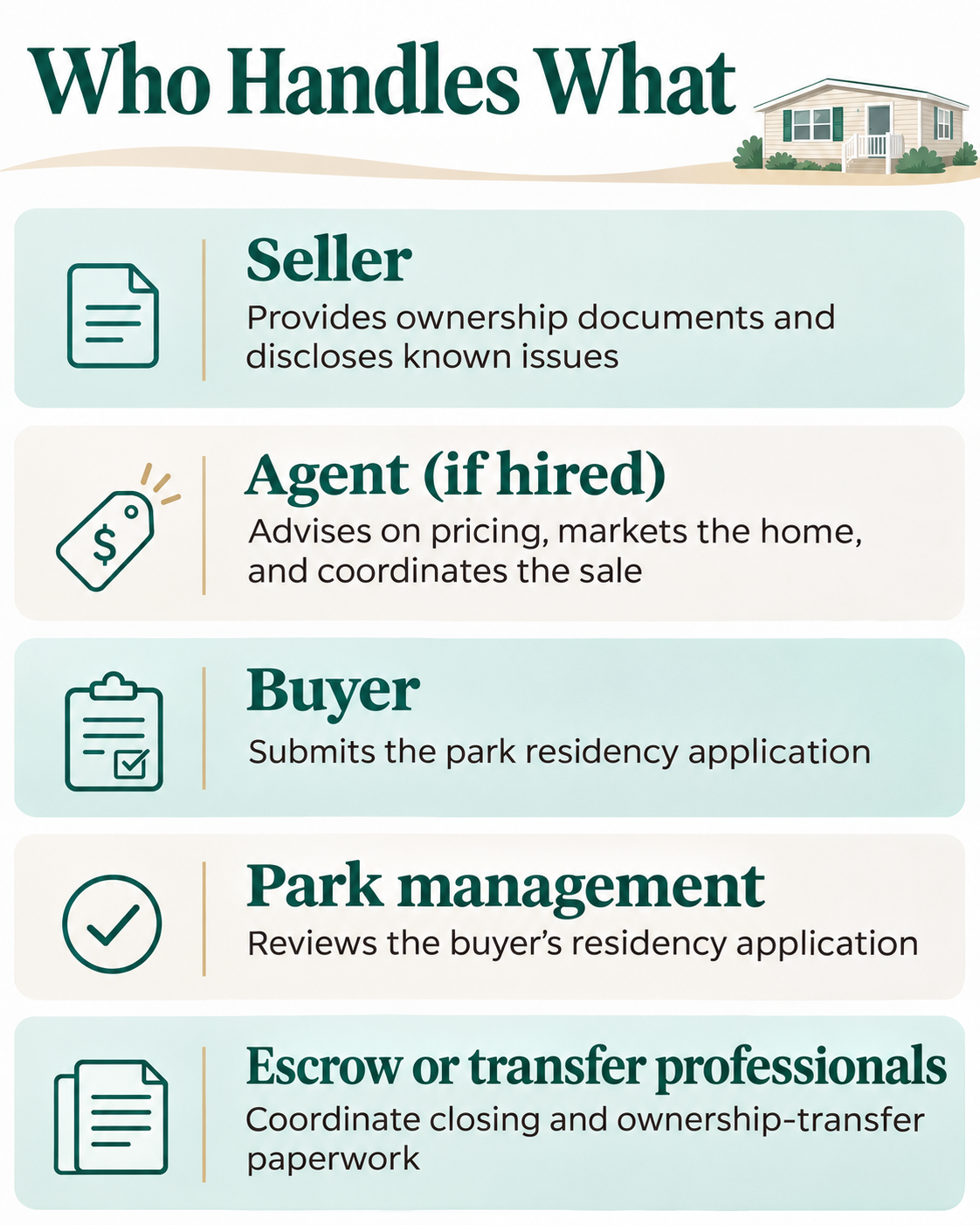
Have the current Certificate of Title and registration card ready for review. If another owner or a lender is listed, work with your sales agent or the person handling the transfer to arrange any required signatures or lien release.
If you cannot locate the title or registration card, contact the California Department of Housing and Community Development (HCD) for the applicable replacement instructions. Keep original ownership documents secure while arranging the sale; do not hand them to a prospective buyer simply to show that you own the home.
Check San Diego Park and Lease Rules
Read your park rental agreement and current written rules. Ask how management handles residency applications, occupancy requirements, and any sale-related information for a home that will remain on its space.
California law allows management to review a prospective buyer for residency, but park management generally cannot prevent the homeowner from listing or selling the home or require the homeowner to use management as the selling agent. The seller or the seller’s agent must notify park management of a sale of a home that will remain in the park before closing.
If you work with a sales agent, the agent can help confirm the current space rent, rental terms, rules, and residency requirements after you accept an offer. Buyers may have a legal right to request certain park information earlier; an accepted offer is not always required.
Gather California Sale and Transfer Documents
Start with the current title and registration card. The other transfer paperwork depends on the home’s ownership, liens, and tax or registration status. Follow HCD’s private-party sale instructions for the type of ownership certificate you have.
Some homes still have a DMV-issued ownership certificate, often called a pink slip. Follow HCD’s instructions for that certificate; don’t assume the transfer should be handled at a DMV office.
Depending on the home, the HCD transfer may also need a transfer form, lienholder release, or tax-related documents. A separate bill of sale is not required for every transaction. County tax clearance applies to certain locally taxed homes, not every park home.
Complete the applicable Manufactured Home and Mobilehome Transfer Disclosure Statement and disclose known issues accurately. If the home stays in the park, management may request a copy of the statement in writing.
Price and Prepare Your Mobile Home
Start with recent sales of similar homes in the same park whenever possible. Compare home age, size, layout, condition, upgrades, needed repairs, and included features. The park’s location, condition, desirability, amenities, and space rent can affect the home’s value.
Do not assume a sale from the closest park is necessarily a good comparable. Two parks near each other may have substantially different home values because of differences between the communities themselves.
Clean the home, remove clutter, and discuss any repairs or an as-is sale with your sales agent if you have one. Make the home available for photographs and showings, and share accurate information about known issues, past repairs, and improvements.
Find a Buyer and Coordinate Park Residency Review
A sales agent can market your home with accurate details and a reasonable asking price, or you can handle the listing yourself if you’re selling without an agent. Park management cannot generally require you to use its listing service or selling agent. Confirm the practical arrangements for showings and inform serious buyers that buying the home and being accepted to reside in the park are different matters.
The buyer, with help from the buyer’s agent if involved, submits the personal residency application and required signatures to management. Park management handles that screening process.
Park management must follow California’s requirements when reviewing the buyer’s residency application. Do not promise a buyer guaranteed approval. This review determines whether the buyer can live in the park; it is separate from your right to sell the home.
Transfer Title and Registration and Close the Sale
Coordinate the title and registration transfer through the applicable HCD process and the parties handling closing. Resolve any recorded lien or legal-owner interest and follow the purchase agreement for funds, signatures, possession, and key delivery. The seller retains originals securely until the transfer is ready to be completed.
A typical sale leaves the home on its current space. California limits when park management can require removal because a home is sold. A planned move calls for separate, transaction-specific advice.
Keep copies of the completed agreement, disclosure paperwork, payment records, and transfer submissions. Coordinate utility account changes and the key handoff according to the agreed closing terms.
Conclusion
Before closing, review the remaining paperwork and deadlines with the person coordinating your sale. Know who is handling the title transfer, when payment and possession will change hands, and whether the buyer’s park application still needs attention.
For help planning your sale, visit SD Mobile Home Guide.